
Project

July 31, 2025
Inquiry-to-Action is a flexible, community-led model helping regions uncover root causes of workforce challenges and co-design inclusive, data-driven solutions—building trust, momentum, and lasting economic impact.

26 participating communities

100+ community conversations held

200+ stakeholders engaged

17 action plans implemented




Local labor markets and talent development strategies are in a constant state of evolution. As such, building resilient regional economies has become an imperative that requires thoughtful planning, inclusive strategies, and new approaches to design and implementation of the programs and services that power workforce pipelines. Organizations tasked with this effort seldom have the resources, time, and tools needed to design and deliver solutions rooted in human-centered design, inclusive collaboration, and measurable impact.

Engage entire communities in understanding and addressing the complex challenges facing their workforce

Identify shared priorities, challenge assumptions, and understand root causes

Co-create inclusive, responsive, and agile interventions tailored to local context and driven by data

Build buy-in and momentum through early wins and measurable, visible progress
Designed and pilot tested with generous support from Walmart.org and JPMorganChase, Inquiry-to-Action is designed to be highly flexible and responsive. It is not a set of pre-defined solutions, nor is it intended to address only niche populations, regions, industries, or issues. The model enables each participating region to “choose their own adventure” as they navigate through a focused sequence of activities that ensures solutions are not built “for” communities but built “with” them—leading to deeper trust, broader adoption, and lasting impact.
Inquiry-to-Action is a community-led, worker-informed solution design model that allows participants to enter at one of two separate phases: Inquiry or Action.
Ideally, participants transition seamlessly from Inquiry into Action. However, the flexibility of the model allows for entry and exit at either stage, with both stages resulting in tangible outcomes and an actionable plan for continued progress. The content and activities within each stage or module may be adjusted to accommodate a more rapid pace or to prioritize key learning objectives.
Inquiry utilizes an asset-based research approach called appreciative inquiry paired with artificial intelligence (AI) to engage a variety of community stakeholders in understanding lived experiences, revealing bright spots and persistent needs and challenges, and gathering ideas for potential solutions from the people most impacted.
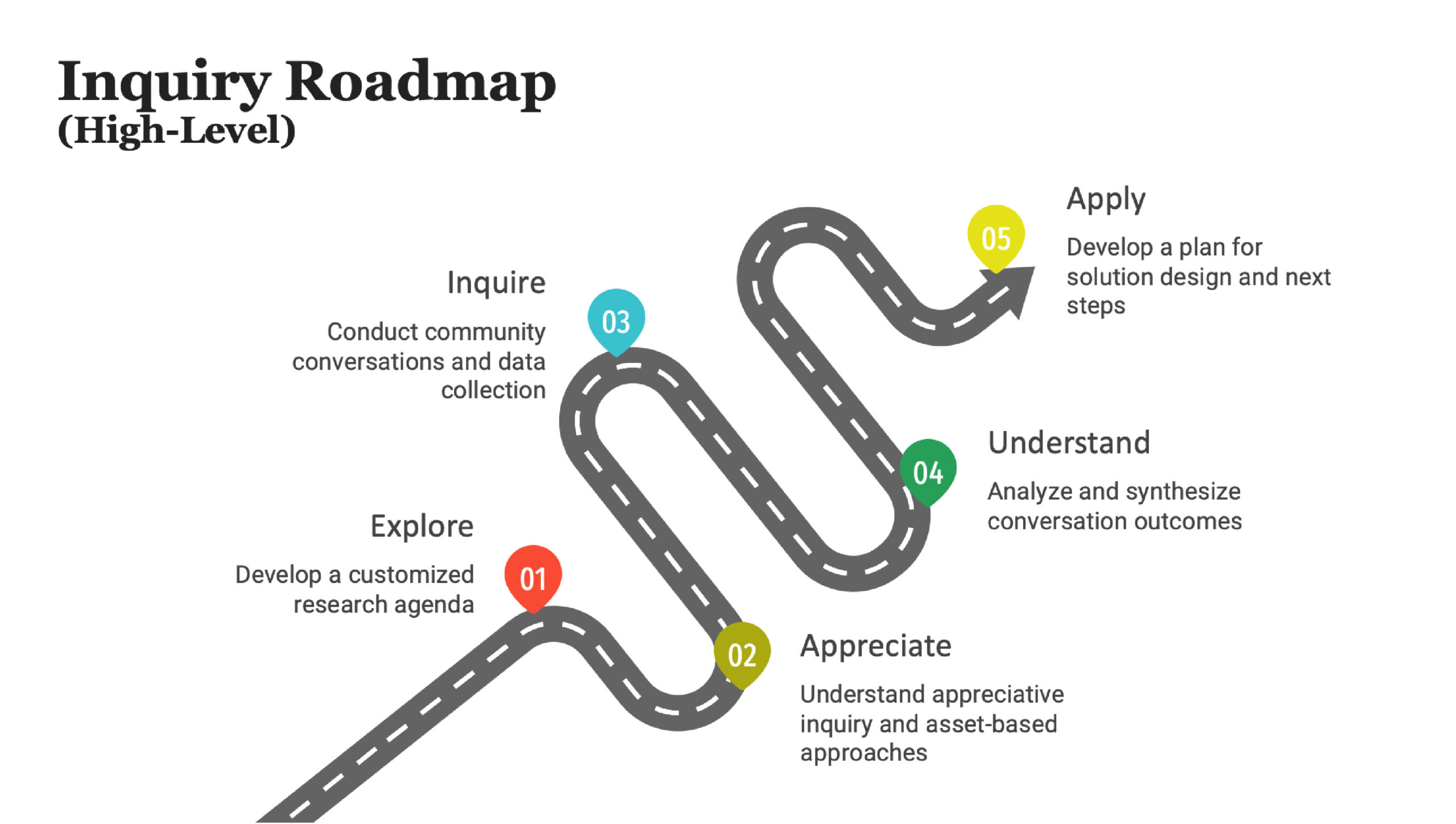
Through the Inquiry experience, organizations will experience the following impacts across their communities:
Through the Inquiry experience, practitioners will be able to:
Action consists of a series of progressive modules along with concepts, tools, and customized coaching. It enables participating communities to clearly define their challenge, map their ecosystem, collaboratively ideate potential interventions, assess desired impacts across stakeholder groups, identify measurable objectives and necessary outcomes, develop a plan of action, and implement pilots to address the challenge.
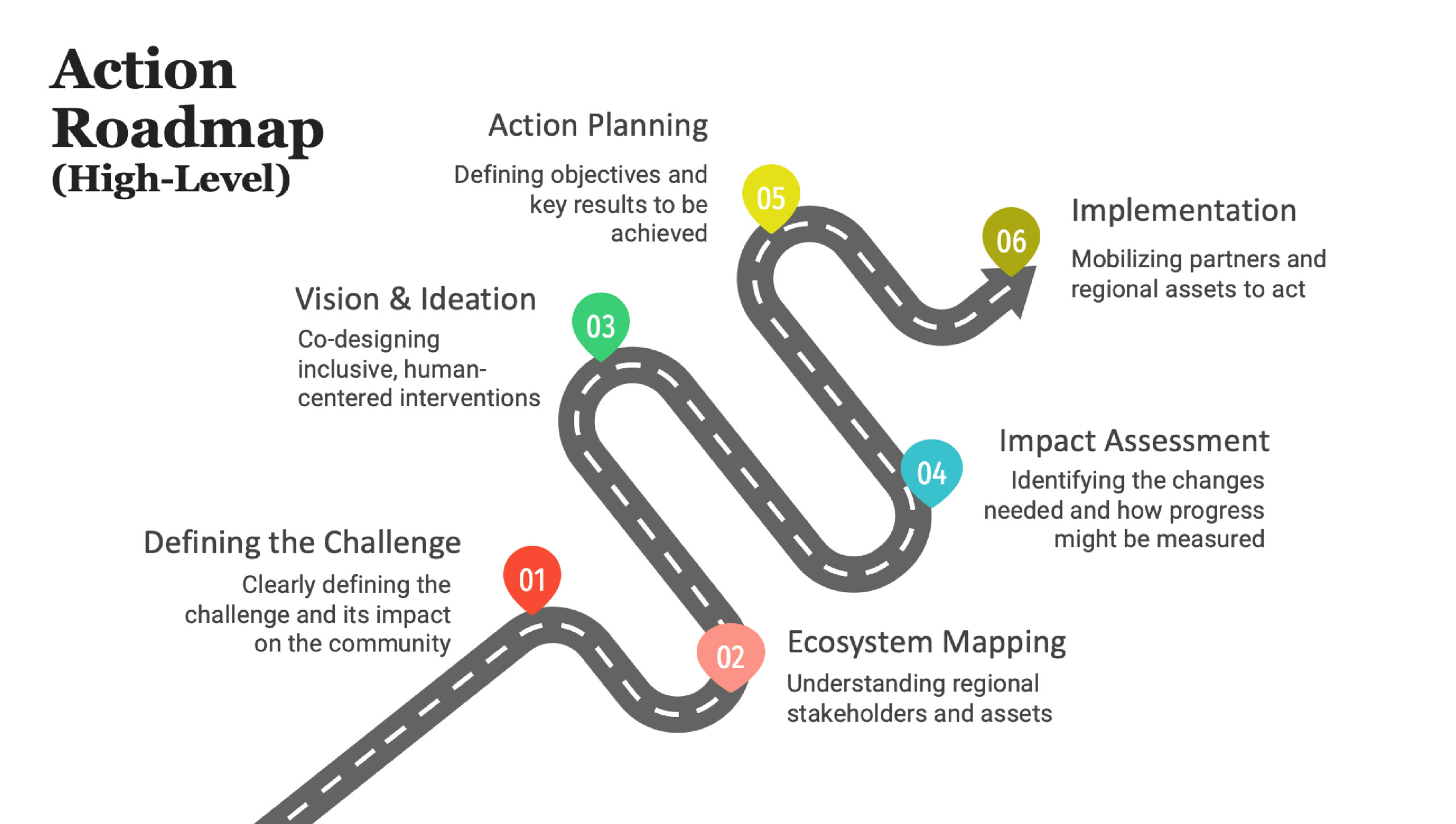
Through the Action experience, organizations will experience the following impacts across their communities:
Through the Action experience, practitioners will be able to:

In early 2023, CareerRise joined JFF’s Workforce Communities of Inquiry in the Deep South initiative. As a workforce intermediary based in Atlanta, Georgia, CareerRise aims to strategically connect the dots between employers, training providers, support services, job seekers, and workforce funders to build partnerships and implement impactful workforce strategies.
Through a series of one-on-one interviews and focus groups with a diverse set of community partners and stakeholders, including job seekers, CareerRise discovered that there was a lack of understanding as to why core programs and supportive services were being underutilized throughout the region. Over the course of this process, CareerRise engaged more than 55 individuals, including 25 Black job seekers and 30 workforce professionals, to better understand the root causes of disconnection in the system. At the same time, it was revealed that a lack of coordination across key players in the workforce ecosystem was hindering effective communication to customers, which left them feeling “confused” and “overwhelmed” by a system intended to support and guide them.
In spring of 2024, CareerRise transitioned into JFF’s Workforce Communities of Action with the intent to collaboratively design a community-informed solution to address the issues identified through their Inquiry experience. With input from their regional partners, CareerRise determined that more complete and relevant data was needed to inform population-specific strategies that would result in lasting impact. They are now collaborating with stakeholders across Atlanta to better understand their collective customer data, compare data sets and definitions, and determine a path forward that enables them to more clearly define customer needs and target market opportunities to those who need them most.
As part of this work, CareerRise is developing a Workforce Equity Report that will serve as the foundation for an Economic Mobility Dashboard; a regional, data-informed tool that will help partners track disparities, identify gaps in services, and monitor progress toward equity. In parallel, they are exploring the development of a customer navigation roadmap, potentially enhanced by AI, that would help job seekers more easily access workforce and support services by matching them to programs aligned with their individual needs, skills, and goals. Together, these solutions aim to create a more transparent, responsive, and equitable workforce ecosystem.

Since early 2023, West Alabama Works has been working to address a persistent challenge in the public workforce system—one that directly affects the learners and job seekers who rely on it for support, training, and employment opportunities.
As one of six workforce organizations participating in the Deep South Inquiry, West Alabama Works took a closer look at what was—and wasn’t—working. The findings revealed a clear disconnect: while many individuals sought job skills and meaningful employment, they were often getting lost in a system that felt complex, fragmented, and impersonal.
In spring 2024, West Alabama Works transitioned into JFF’s Action experience, using the tools, coaching, and concepts to engage partners in active collaboration and co-design a solution they could all support. A key priority was creating a process that would be easy to adopt, testable before full-scale implementation, and minimally burdensome for workforce professionals already at capacity.
By spring 2025, West Alabama Works began pilot testing Access Connect across its workforce ecosystem. Access Connect is a high-touch, user-friendly experience that helps individuals navigate the workforce system and connect with the resources they need. The improved process incorporates technology, stronger partnerships, and greater accountability—not only to enhance system-wide performance, but to deliver real outcomes: better access to training, stronger skills, and meaningful employment.
Stakeholders have responded with excitement and curiosity as West Alabama Works continues to refine the solution based on user feedback and prepares to scale it across additional counties in West and North Alabama.
The Workforce Development Board of Solano County joined JFF’s inaugural Workforce Communities of Action cohort in summer 2023 alongside 19 other workforce development organizations across the country. The Board entered the Action experience seeking ways to create a robust talent pipeline infrastructure that would enable their region to serve as a hub for the emerging biomanufacturing/biotech industry. The Board had a vision, but needed time, space, and support in developing the relationships required to design a regional strategy that engaged a variety of key stakeholders.
Utilizing the concepts, tools, and coaching provided through the Action experience, the Board was able to increase awareness, build collaboration, and convene a diverse group of government, educational, economic development, and nonprofit organizations to achieve consensus on a regional action plan.
Since then, the workforce board has emerged as a key driver of awareness and talent development for this growing industry, releasing a comprehensive report focused on the regional biotech talent pipeline infrastructure and helping to organize an interactive biotech career fair for more than 200 local high school students.



We’d love to talk to you about how your organization or coalition can become a driver of community-informed workforce solutions through Inquiry-to-Action‘s guidance and tools. Complete this form, and a member of our team will reach out to schedule a conversation to learn more about your needs.

