Looking Ahead
To advance important systems change, JFF and its partners were intentional in the design and implementation of youth-centered practices and worker voice. The goal was to develop new and expanded programs to meet the needs of apprentices and to ensure that their experiences informed how employers, education providers, and other partners approached the work. Individual partners implemented a range of practices, including trauma-informed approaches, ambassador programs, and alumni activities.
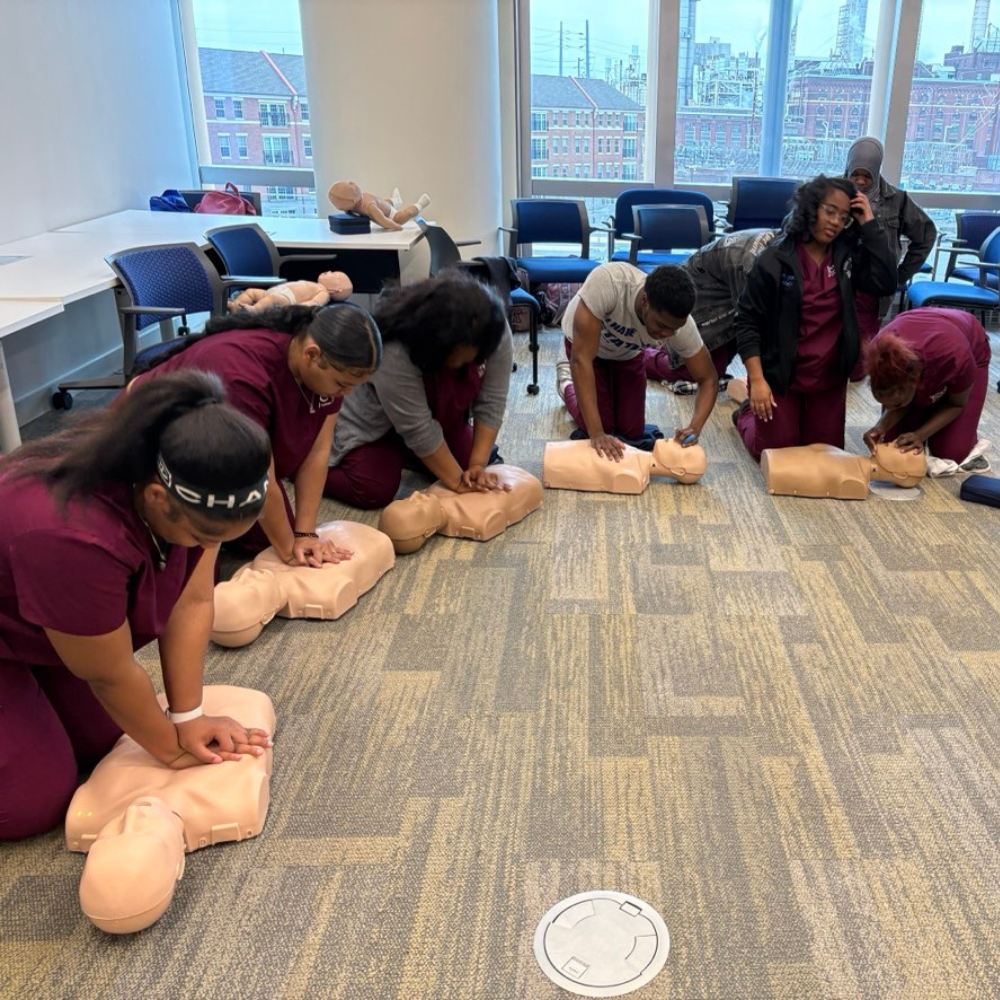
JFF facilitated a national Youth Council of Changemakers (YCC) comprising pre-apprentices and apprentices from programs supported by ABA funding. Their knowledge and expertise helped to shape technical assistance and coaching, informed the design of mentorship programs, and enhanced employer practices.
The discovery that the pre-apprenticeship-to-Registered Apprenticeship (RA) conversion is low required further exploration, a research need complicated by the fact that the DOL’s Registered Apprenticeship Partners Information Data System (RAPIDS) does not track pre-apprenticeship enrollment and completion or post-training placements. And, because not all states have formal processes for approving and recognizing pre-apprenticeship programs, state-level data on articulation from pre-apprenticeship to RA is inconsistent. To mitigate this lack of formal data, JFF looked inward to the pre-apprentice completers, the pre-apprenticeship practitioners, and the employers JFF has supported through the ABA grant.

These findings suggest that pre-apprenticeship is delivering meaningful value, even when young people do not move immediately into RA. Participants are building confidence, technical skills, workplace readiness, and clearer career goals, and for many youth, strong outcomes include continued education, employment, and informed career decision-making, gaining enough exposure to decide whether a specific trade is the right fit before making a longer-term commitment.
While the immediate transition into RA remains relatively uncommon, these outcomes underscore that pre-apprenticeship should be understood as an important bridge to multiple positive next steps, not only apprenticeship enrollment. The strongest programs pair technical instruction with hands-on learning, mentorship, wraparound supports, and employer engagement, reinforcing that pathway design matters for both participant experience and long-term transition success.
Expanding youth transitions into RA requires stronger systems-level alignment, including transportation and scheduling solutions, greater employer readiness and mentoring capacity, sustained funding and administrative support, and clearer navigation supports for youth weighing apprenticeship alongside other options. Going forward, pre-apprenticeship practitioners, intermediaries, and policymakers should define success broadly while doubling down on youth-centered pathways into RA and other quality career opportunities. By investing in these program and system conditions now, communities can ensure that more young people access training, advancement, and long-term economic mobility through pre-apprenticeship and the pathways it unlocks.
Looking to strengthen your workforce pipeline through a pre-apprenticeship or apprenticeship program?
Connect with Jobs for the Future to discuss partnership opportunities and how we can support your goals.
This project is funded by the U.S. Department of Labor, Employment and Training Administration, as part of the Apprenticeship Building America grant totaling $5,310,000, with $2,003,460 financed from non-federal sources.