What We Learned
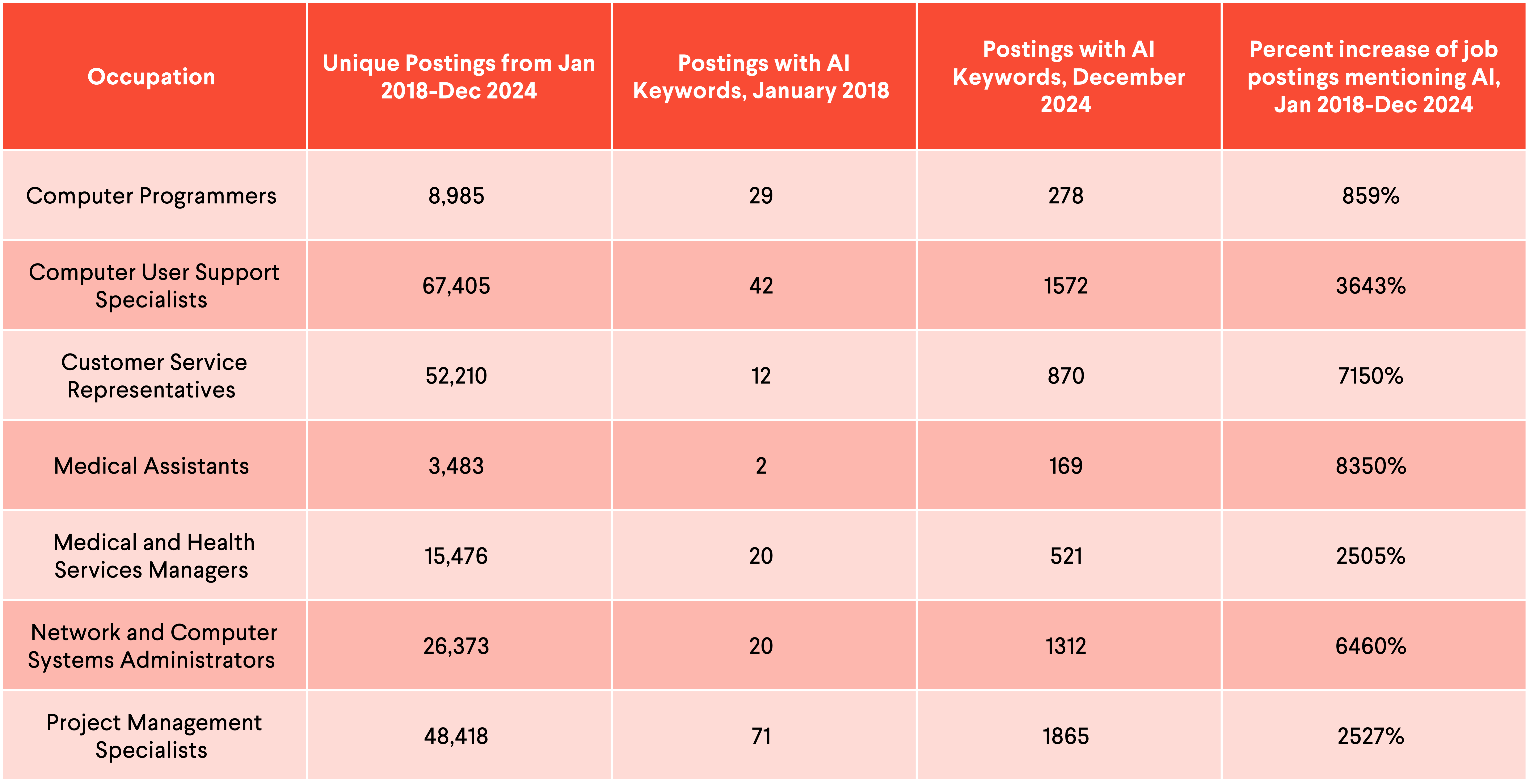
From this analysis we see three emerging themes occurring across these seven occupations in tandem with the growing prominence of AI in the workforce:
1. Specialized digital skills (skills that require advanced expertise) are experiencing high rates of churn as new technologies are introduced and certain once-ubiquitous industry skills are likely being replaced by, or rolled into, new skill sets. In addition, there is a correlation in the labor market data between the rise of AI and the churn seen in the digital skills category. This means that technological advancements, accelerated through AI adoption, are shortening the useful life of some specialized skills and creating challenges for skills training to keep up with this rapid pace of change.
EXAMPLE
For network and systems administrators, cloud solutions and cloud computing are critical and growing specialized digital skills. We see demand for these skills increasing while skills such as distributed computing and database modeling are decreasing. This suggests that skills related to older technologies are gradually being replaced by skills associated with new technologies at an accelerated rate.
2. Professional skills, both specialized and generalized, are continuing to show up consistently in job postings, with nearly the same percentage appearing in 2024 as 2018. This means that, while digital skills are experiencing rapid and uneven turnover, employers are looking for both domain-specific and domain-agnostic professional knowledge in workers.
EXAMPLE
For customer service representatives, we see a continued valuing of professional skills like business operations and project management.
3. Human skills are rapidly and consistently increasing in demand from employers independent of occupation. AI may already be reinforcing a shift in demand for these non-specialized skill sets, even in highly technical roles, suggesting that these human skills are more resilient to displacement by AI.
EXAMPLE
Skills like critical thinking, problem solving, initiative, leadership, and communication were increasingly prioritized across each of these occupations.