To earn trust and meet the growing demand for rural workers with green skills, it is essential to identify social leaders who garner the respect of the community of workers you seek to engage. As you build outreach, training, and retention strategies, involve these leaders in planning committees and key staff positions to align solutions with the community’s needs.
Additionally, consider potential barriers to success and offer support and wraparound services—such as transportation, participation and training stipends, and translated materials—to address these barriers. Finally, recognize both the heterogeneity and strengths of rural communities. Not all rural communities are the same—understand the community’s unique assets and opportunities and design solutions and strategies grounded in its strengths.
As we transition to a greener economy, we cannot leave rural communities behind. A truly just transition requires rural communities, which produce much of our food, energy, and water, to be at the forefront of green skill integration.
These insights show there’s real promise and knowledge in leading regional efforts to develop quality green jobs. That’s why JFF is expanding our partnership with regional leaders that have demonstrated impact.
10 Members Advance in Regional Challenge
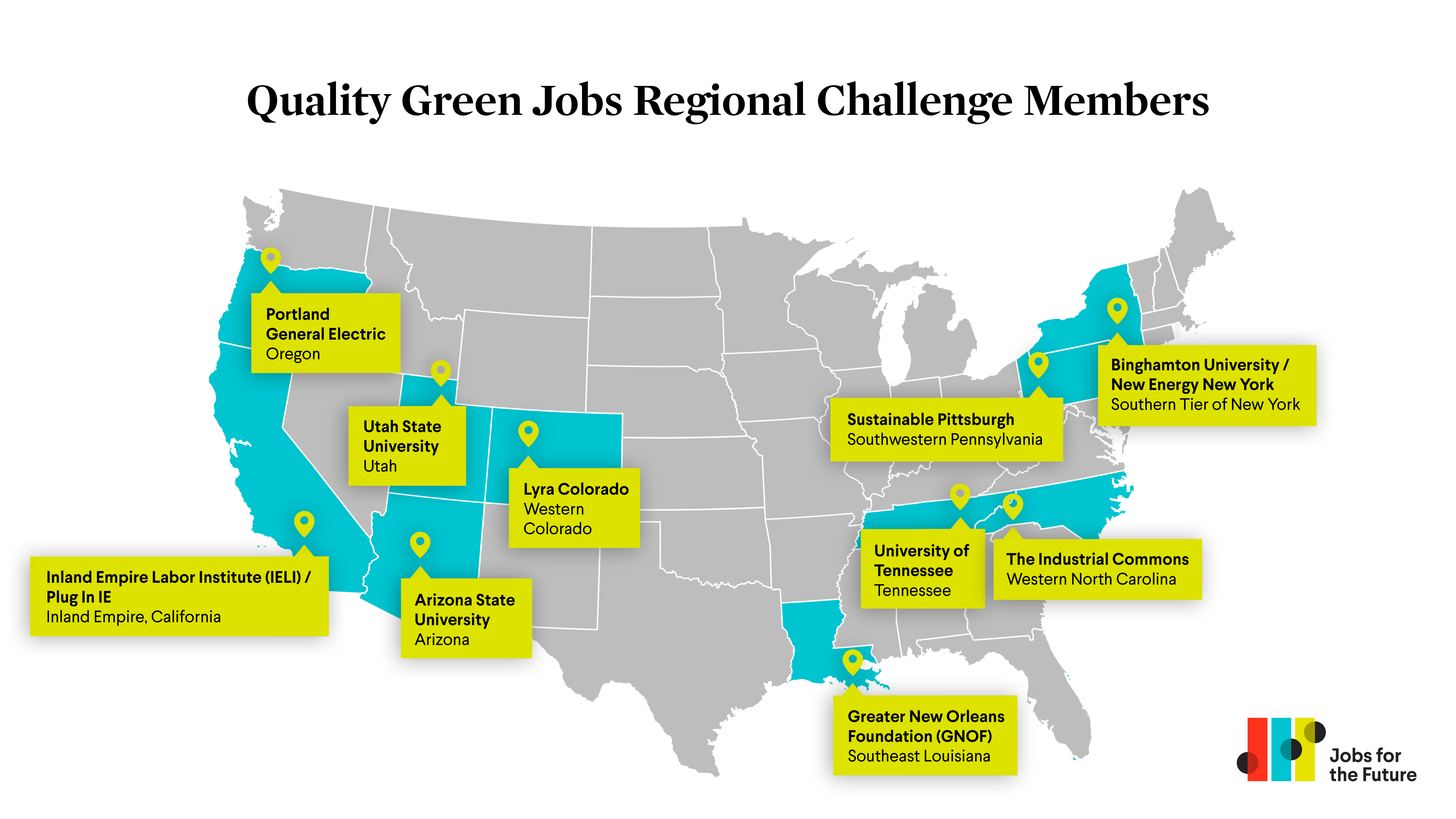
Today, JFF and the Ares Foundation are thrilled to announce the 10 regions that will advance to Phase 2 of the challenge and receive $75,000 planning grants. Collectively, these regions are positioned to train and place 25,000 individuals in quality green jobs by 2027.
JFF will continue engaging with all 20 Phase 1 grantees by sharing resources and facilitating connections to advance regional work.
In Phase 2, the 10 Challenge Members will develop regional Quality Green Jobs Agendas detailing their strategies for training individuals and placing them in quality green jobs. The Quality Green Jobs Regional Challenge celebrates the unique role of regions and regional leaders in fostering solutions at the intersection of climate and workforce development. The challenge will elevate successful, scalable regional strategies and models to accelerate a clean energy transition that drives equitable economic advancement for all.