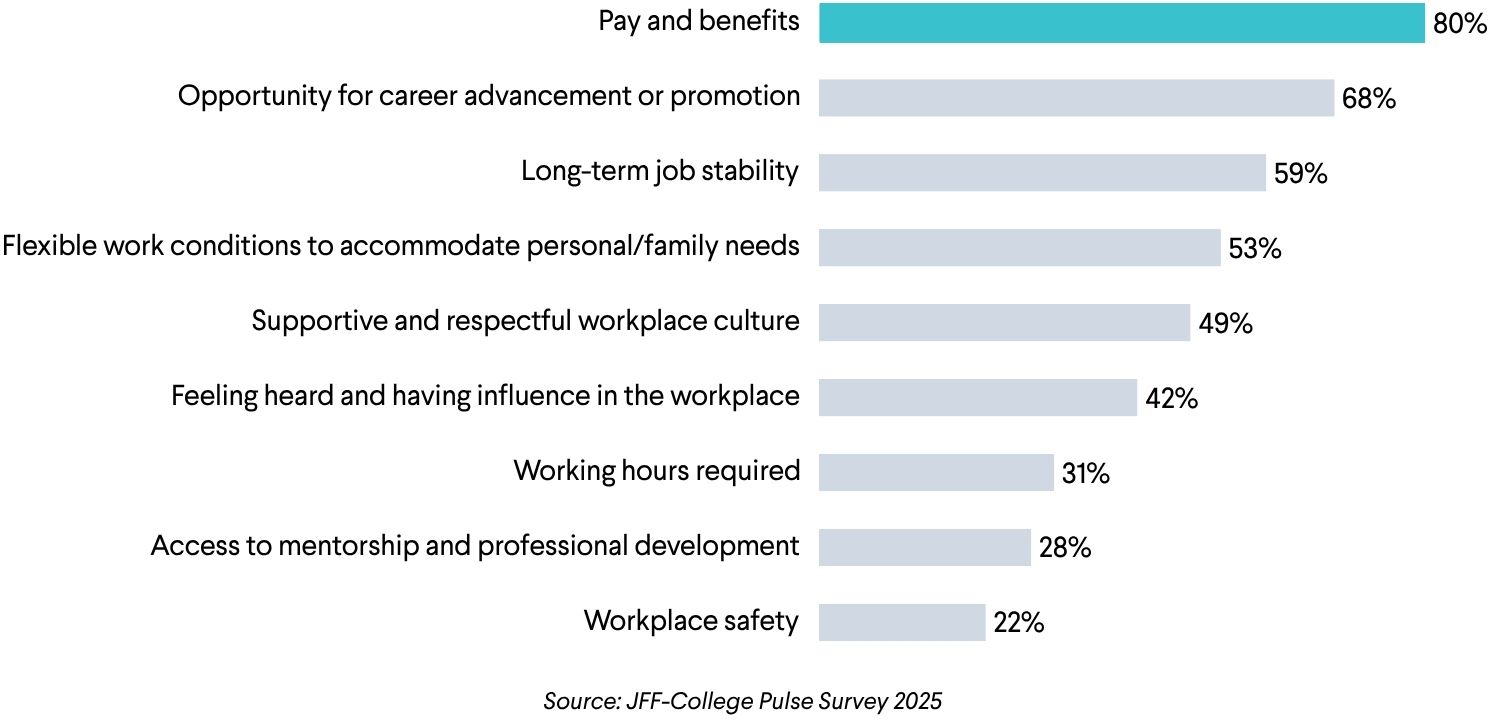
These findings offer employers a practical starting point: make the quality and trajectory of a job clear before someone is hired.
That means publishing transparent pay ranges, explaining skill expectations, and showing how workers can move from frontline, trade, or support roles into supervisory and professional positions. Employers should also consider offering tuition assistance, certification support, and paid time for learning.
Career pathways become more credible when employees can see people like themselves moving through them. Internal mobility, promotion from within, and visible examples of advancement can help employers strengthen retention while signaling that long-term opportunity is part of the job.
Widen entry points and remove unnecessary degree barriers.
The built environment workforce includes occupations with widely varied skill requirements and points of entry, from community-based training to union apprenticeships to college degree programs. In addition, the sector remains divided by education and earnings. Many higher-paying architecture, engineering, and design roles require bachelor’s degrees, while workers in more accessible trade roles often face weaker starting pay and unclear pathways to long-term advancement.
Employers can partner with local school districts and community organizations to help build awareness of career opportunities. Employers can also help close that occupational divide by examining how they define readiness. Which credentials are genuinely necessary for a role? Which are simply familiar signals that may screen out capable candidates? Separating required qualifications from preferred ones can broaden the pool without lowering standards.
Employers can also build more entry points through paid pre-apprenticeships, apprenticeships, and partnerships with community colleges and workforce organizations. Hiring for demonstrated skills and potential alongside formal education can open opportunities for workers who have strong capabilities but limited access to traditional credentials.
The goal is not to eliminate degrees where they are needed. It is to create clearer routes into professional and supervisory roles for workers who began elsewhere, and to make advancement possible for people who build expertise through experience.
Treat belonging, mentorship, and safety as core operating practices
Workers’ decisions to stay are shaped by more than compensation, even if that remains a top priority. Culture, representation, day-to-day treatment, scheduling, mentorship, and workplace safety all influence whether people believe they can build a future in the field. These conditions are especially important for women and workers of color, who remain underrepresented across most built environment occupations and continue to report barriers related to racism, harassment, and belonging.
To become destination employers, corporations should consider investment in trained mentors, bystander intervention, respectful-workplace initiatives, affinity groups, flexible scheduling, and manager coaching. These practices work best when they are sustained and connected to accountability for managers and executive leaders.