
Survey
October 8, 2026
Drawing on insights from a gathering of workforce and education leaders, we outline five no-regret steps to prepare people and organizations for a labor market increasingly shaped by agentic AI.
Agentic AI—systems that can act autonomously to accomplish a goal, rather than simply responding to a prompt—capabilities are improving rapidly. These systems can plan and execute multistep tasks, use external tools and systems, check their work, and iterate with limited human intervention, enabling them to take on large tasks and potentially entire jobs. Organizations across industries are already scaling adoption: A Deloitte survey fielded between April and June 2026 found that 74% of leaders within companies that were at least piloting agentic AI solutions expect nearly half of their business processes to be redesigned around AI agents within four years, and 43% expected agentic AI to “significantly disrupt their workforces” in the next 12 to 18 months.
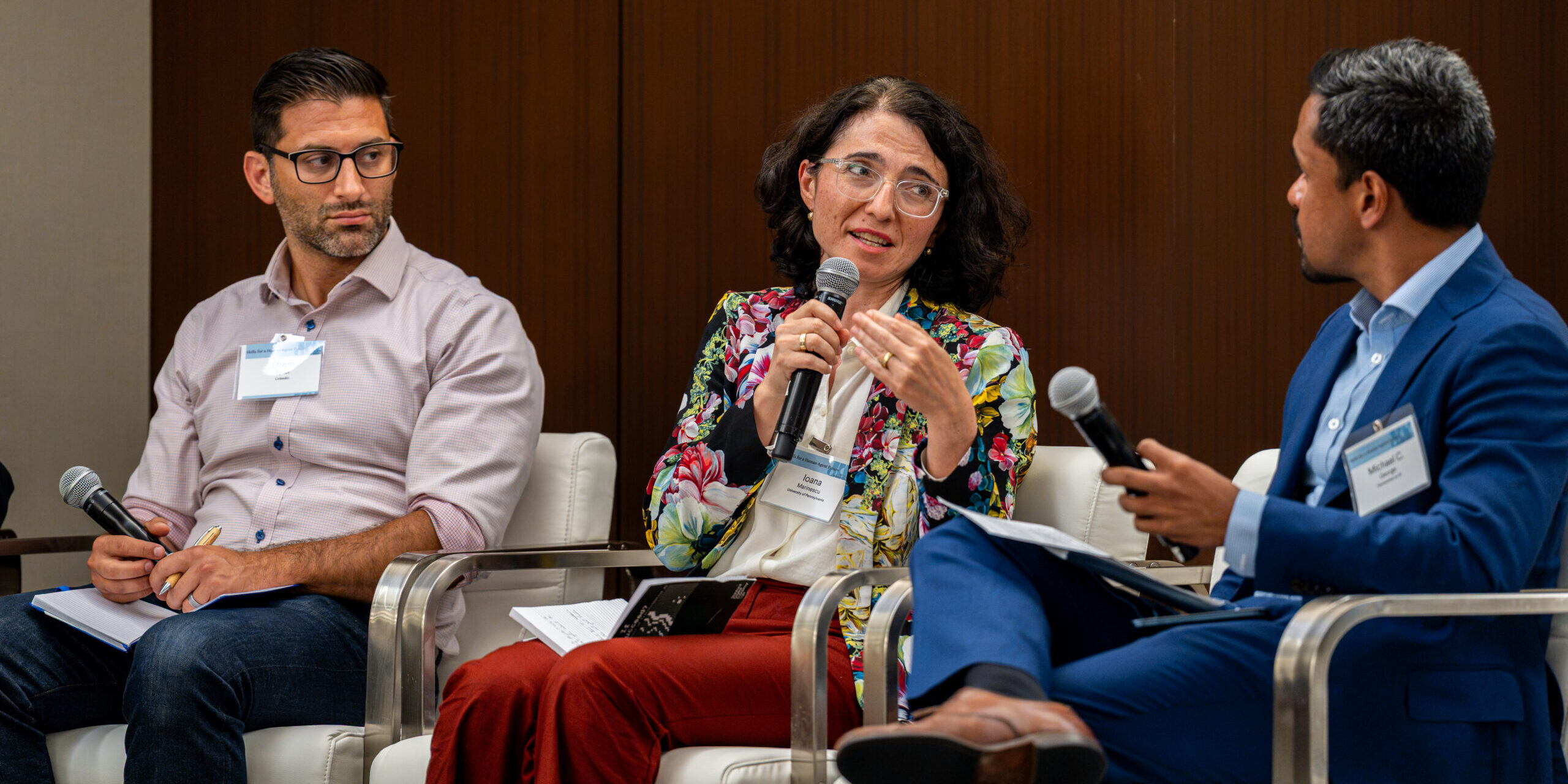
In July, the “Skills for a Human-Agent Future” gathering convened leaders to better understand how agentic AI reshapes the skills, organizational and job design, training, and assessments needed to prepare people for human-AI collaborative work, and to identify what the field can do now to prepare.

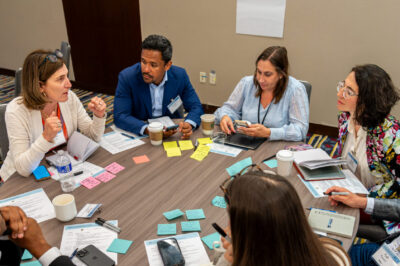
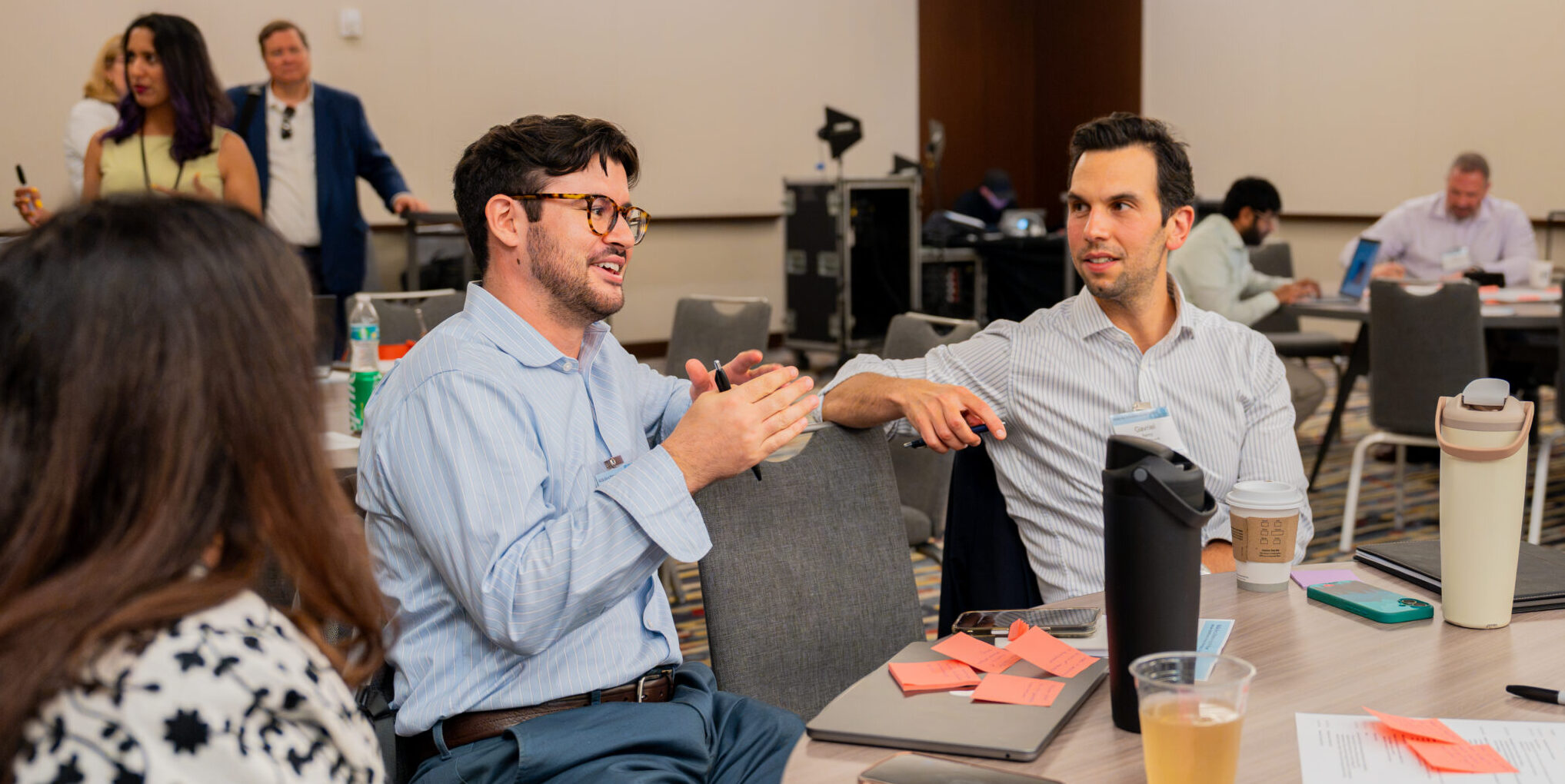
The day, organized by the Center for AI & the Future of Work at Jobs for the Future (JFF) with support from Google.org, progressed from the technology itself to the implications of adopting and using agentic AI. Throughout the day, attendees also participated in group scenario-design sessions to envision agent-enabled futures and explore how best to respond in ways that support, rather than disrupt, quality jobs and human work.
"Leaders do not need to predict the future to begin preparing now."
The central message was clear: leaders do not need to predict the future to begin preparing now precisely. Here are five no-regret moves workforce and education leaders can take now while preparing people and organizations for a labor market already being shaped by agentic AI.
Much of the growing work on AI literacy across the U.S. has focused on developing AI skills among individuals. While this has in no way gone far enough—in an early 2026 JFF survey, only 37% of workers said that their employers currently offer training on AI skills—agentic AI’s ability to operate at the organizational level, collaborating with multiple workers or teams and cutting across functional areas, means that the rising tide of AI readiness must lift the whole organizational boat.
The work and learning ecosystem has a dual mandate regarding AI adoption: to integrate AI as a tool to improve business effectiveness and efficiency, and to understand it as a transformative force that will change jobs and reshape skills. From our early observations, organizations advancing on both at once are much better positioned to adapt and thrive in the age of AI.

Speakers noted that AI capacity-building is crucial for leaders, who need to understand and reckon with potential changes to workflows, needed skills, decision rights, management, data practices, and more. While ideally all of that happens before large-scale AI deployment, organizations are also learning as they build, working alongside teams and evolving and improving as AI capabilities progress. Just as important: these efforts should rightly prompt leaders and organizations to contextualize AI adoption within workforce planning, job design, and employee engagement—for workforce organizations, both for their own staff and for the participants they serve. Too often, however, these essential elements are afterthoughts or deprioritized because of limited capacity.
We need a concerted strategy to ensure that every organization in the education and workforce ecosystem has the support they need for ongoing—not just one-and-done—AI readiness at the organizational and leadership level, including tailored training, flexible resources, and hands-on support that marries AI literacy, data readiness, digital transformation, workforce planning, and mission and policy alignment.
Leaders at the event described workplaces that, in just one year, had shifted from people executing tasks themselves to building, collaborating with, and verifying AI agents’ work, and increasingly orchestrating teams of agents. The bar for domain expertise and fine-grained human input is rising, as evaluating agentic AI outputs often increases the need for critical thinking and judgment skills. Education and training systems already struggle to effectively integrate the development of these durable skills, and to recognize when demand for more sophisticated skills is emerging earlier. At the same time, the pace of AI innovation compounds fears that every new model release will need a new course or credential.
We need agile learning models grounded in the human skills that we expect to be augmented and elevated by AI, and the capacity to learn, adapt, and apply emerging technology in context. These new models will depend on shorter feedback loops between employers, educators, workforce organizations, and learners. Training providers need ways to quickly hear how jobs and workflows are changing—or, where possible, to anticipate this based on their own adoption and understanding of AI—and then revise curricula and supports without waiting for a multiyear redesign cycle. Employers, in turn, need to treat learning and upskilling as part of implementation rather than an optional add-on after a tool is deployed.
Work-based learning models such as apprenticeships, which combine hands-on experience with external technical instruction, will continue to grow in importance as an essential model for the development of durable skills. Learners need safe environments where they can practice these skills, build resilience and adaptability, manage agents, test decisions, receive feedback, and undo mistakes, leveraging agentic AI skills and durable skills in complementary ways that will be essential on the job. Google.org provides an example of how to build or expand apprenticeship programs for an AI-ready workforce with the recent publication of their Apprenticeship Toolkit.
The urgency is especially clear as agents absorb entry-level tasks. JFF’s Advancing AI-Resilient Early-Career Pathways, launched with foundational support from Google.org, explores new approaches centered on work-based learning, durable skill assessment, and employer engagement to identify promising early-career models. Together, these efforts aim to generate practical, scalable approaches that strengthen the transition from education into work.
As generative and agentic AI adoption grows, AI literacy skills will be increasingly inseparable from durable skills—and both will depend on a work and learning ecosystem that’s agile enough to support their lifelong development.
Innovations in assessing durable human skills are already underway, and the intersection of agentic AI with these skills will highlight the need to better understand what people can do, in which contexts, at what level of responsibility, and how those capabilities can be demonstrated reliably.
Multiple speakers highlighted challenges ranging from developing durable skills assessments that capture richer context to finding ways to validate them amid disagreements over what effective skill performance looks like and engaging learners enough so that assessments are both effective and a form of learning.
We will need to continue to test and invest in innovative skill assessment approaches that use multiple sources of evidence to capture skills formatively, including projects, work products, reflections, observations, performance tasks, and authentic interactions. Achieving this will require stronger infrastructure, shared evidence standards, aligned incentives, and reporting practices so that demonstrated capabilities are meaningful and trusted by learners, educators, and employers.

Broad data on AI’s overall effect on the labor market remain relatively nascent, and insights into the specific impacts of agentic AI are nearly nonexistent. For AI generally, job postings, employer interviews, and state and local workforce data offer early signals, but rapid adoption is transforming most jobs incrementally from within—changes that traditional methods often miss because they rely on new job postings. Understanding AI adoption at the firm level does not always translate into signals of occupation-level exposure.
The most useful analyses will explore whether employers are actually deploying AI, which workers are affected, what alternative roles exist, how well-equipped those workers are to navigate disruption, and what supports would make the transition smoother. Data on employer adoption may require different or more granular measures to distinguish the implications of agentic AI from other forms of AI. This approach could help lay the groundwork for a better understanding of future AI developments. Stakeholders across the ecosystem are already working to identify and shape new data sources and infrastructure to help fill some of these gaps.
At the same time, this data, however real-time, will likely always be a lagging indicator of change happening on the ground—and the profusion of sources risks increasing the noise rather than clarifying the signal. Alongside better data, education, and workforce leaders will need support with sense-making and triangulation, and with the accelerated adoption of proven practices such as in-depth, ongoing employer engagement to ask how work is changing, map likely destination jobs, and align training and support before displacement occurs.

Scenario planning is an essential tool across the field, helping national, state, and regional leaders consider the potential implications of shifts in the pace of technology development and adoption. Efforts such as the AEI–Urban Commission on AI and the Future of the American Workforce (JFF CEO Maria Flynn is among its commissioners) are critical vehicles for assessing macro forces and building a portfolio of policy interventions. As a complement to these efforts, education and workforce leaders should never miss an opportunity to leverage existing legislation and program infrastructure to pilot new approaches and reach jobseekers, workers, employers, and organizations to adapt and minimize disruption—especially where policy already incorporates flexibilities designed to spur innovation.
For example, states and regions can serve as innovation laboratories by partnering with employers and other stakeholders to use existing policies like WIOA for incumbent worker training, permitting support for the incorporation of AI skills into local and sector-relevant curricula, and high-quality on-the-job training matched with career navigation and supports, helping workers upskill and avoid layoffs.
And most of what’s needed is already familiar in the workforce world: better labor-market information, stronger training capacity, wraparound supports, skills-based hiring, closer employer engagement, and earlier adjustment assistance. What must change is the speed and timing of that support. Workers may need help before a layoff happens, while they’re still employed and in a position to move into a new role.
This kind of experimentation should come paired with real safeguards: who gets access, who might be left out, what data gets collected, and whether mobility and job quality actually improve. Leaders should test these approaches, evaluate results, and adjust quickly while maintaining worker protections, accountability, and public trust.
Join the Center for Artificial Intelligence & the Future of Work in turning uncertainty into action—and ensuring AI expands access to quality jobs and economic opportunity for all. Subscribe for updates, explore our resources, and connect with us to help build a future that works for everyone.

