Why This Work Matters
There are promising trends in dual enrollment, with more students participating than ever before. During the 2022–23 academic year, an estimated 2.5 million high school students took at least one college course. In 2024, state legislatures introduced more than 243 dual enrollment–related bills, and 21 states enacted new policies to strengthen or expand these opportunities.
At the same time, community colleges across the country are seeing a rise in enrollment among students under age 18, even as overall enrollment has declined.
But these opportunities are not reaching everyone. Students in rural areas may only have access to a few courses, or none at all. Students from families with low incomes are often asked to cover unexpected fees or textbook costs. And first-generation students are less likely to enroll in dual credit programs, often because of gaps in outreach, advising, or course alignment.
The path from high school to a career should not depend on a student’s ZIP code, income level, or access to specific programs. Yet too often, those factors determine whether a student is able to take advantage of opportunities like dual enrollment.
The IDEAS project offers a way to change that.
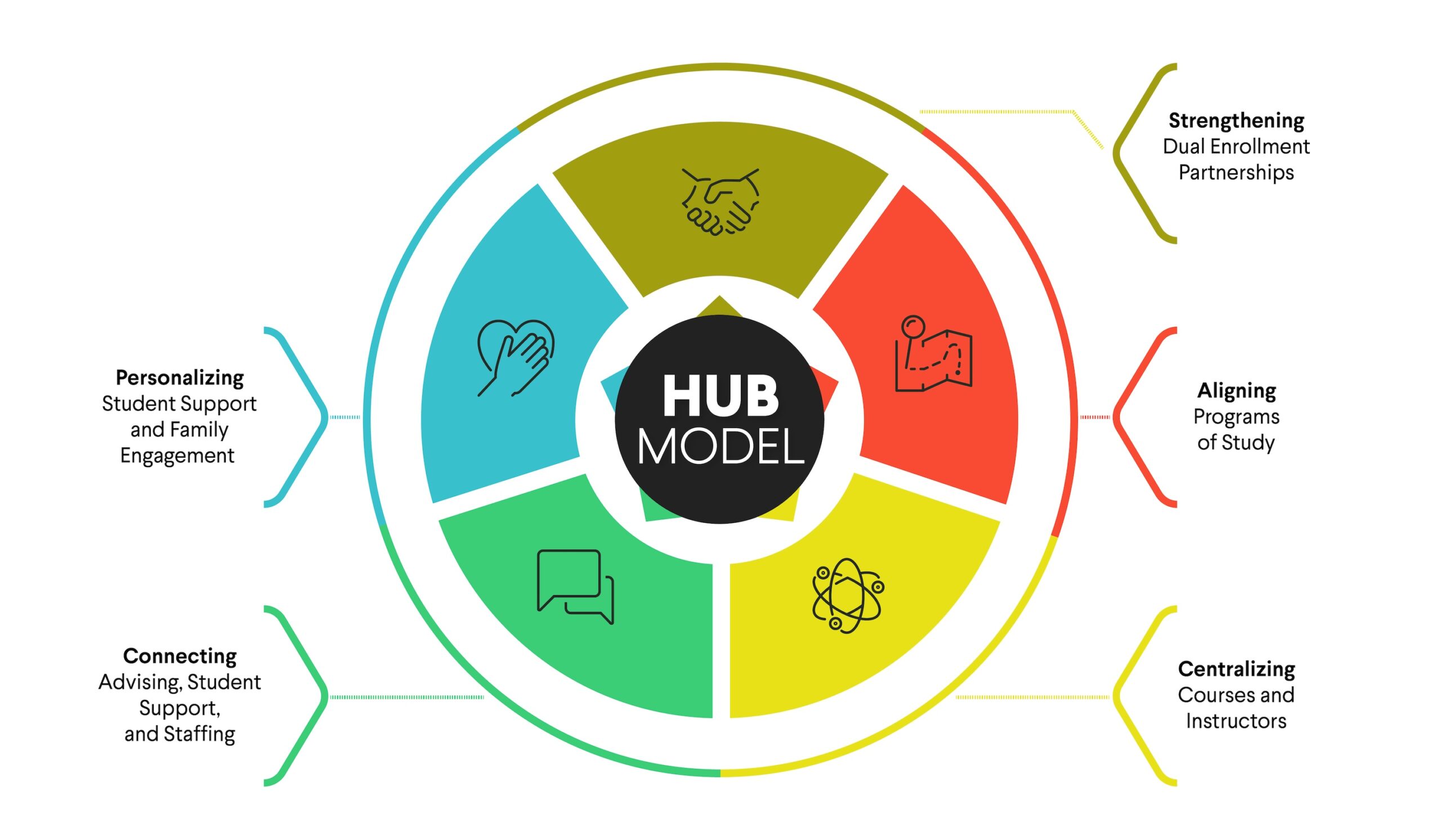
- For states, IDEAS provides a model for aligning policy, funding, and practice.
- For colleges, it offers tools to build more consistent partnerships and deliver high-quality dual enrollment programs.
- For communities, it creates stronger connections between education and workforce systems.
- For students and families, it means a clearer, more affordable path from high school to meaningful careers.
At JFF, we know that dual enrollment, when designed thoughtfully and implemented well, can be a game-changer. With IDEAS, we’re learning what it takes to expand that opportunity to all students, not just a lucky few.