Skip to content
Four scientists in lab coats examine and discuss X-ray images on a light board in a clinical setting.
Impact Story

From Local Impact to Regional Growth

Goodwill of North Georgia's Apprenticeship Expansion Strategy

June 24, 2026

At a glance

This impact story highlights how Goodwill North Georgia uses an organization-wide approach to expand regional apprenticeships. Its established infrastructure drives scalable growth and increases apprenticeship opportunities across communities.

Goodwill of North Georgia (GNG) serves communities across 45 counties through a workforce model focused on job training, career placement, and employer engagement. Working with more than 5,000 employers spanning the health care, transportation, logistics, retail, and technology sectors, GNG has helped more than 100,000 individuals access services, jobs, and training—including pre-apprenticeships and Registered Apprenticeships—over the past five years.

GNG has long operated workforce training and job placement programs, but apprenticeship was not always formally named or consistently understood as part of that work. In 2019, through its participation in Jobs for the Future’s (JFF’s) Apprenticeship Expansion and Modernization Fund contract, GNG expanded its offerings to include pre-apprenticeship and Registered Apprenticeship programs, with a specific focus on engaging with youth and young adults. Rather than launching those programs as separate initiatives, GNG built on its existing foundation of industry-aligned training and career pathways. Leaders saw earn-and-learn programs as a natural next step in work already underway, particularly as apprenticeship gained visibility in national workforce conversations and surfaced more often in discussions with employers. Over a few short years, GNG transitioned existing training programs into nine new Registered Apprenticeships and raised awareness of the model with employers across the region.
Early implementation, however, revealed a need for greater coordination across teams and departments and for an organization-wide strategy. GNG realized that to scale apprenticeship effectively, engage the business community, and increase access for more participants, the entire organization needed to understand the model and how it fit into each team’s work. That became the focus of its work as a beneficiary of JFF’s Apprenticeship Building America (ABA) grant, starting in 2022. Through this initiative, GNG created and expanded pre-apprenticeship and Registered Apprenticeship programs, increased youth and young adult participation, and scaled employer engagement, including partnerships with national employers, such as clothing retailer Ross Stores. Through coaching, technical assistance, financial investments, and participation in a community of practice with other ABA grantees, GNG deepened its apprenticeship expertise and implemented an organization-wide strategy aligned with regional labor market conditions and the diverse needs of employers across sectors and different parts of the state.

The GNG apprenticeship team led the effort to embed apprenticeship as a strategic priority. They worked with leadership to help the organization understand earn-and-learn programs not as a departure from its mission but as a way to strengthen and formalize work already underway across recruitment, training, placement, and employer engagement. As that shared understanding deepened, apprenticeship evolved from a side initiative into an integrated workforce strategy across teams and departments, even as GNG continued adapting its approach across a large and diverse service area.

To date, under the ABA grant, Goodwill of North Georgia has achieved the following outcomes:

150
youth and young adults served
113
youth and young adults enrolled in pre-apprenticeship
80
youth and young adults completed pre-apprenticeship
50
youth and young adults enrolled in Registered Apprenticeships
21
youth and young adults completed Registered Apprenticeships
2
existing Registered Apprenticeship programs expanded
2
new pre-apprenticeship programs created
2
existing pre-apprenticeship programs expanded

Strategies To Build and Scale Apprenticeship

As apprenticeship became a clearer organizational priority, GNG organized its work around four reinforcing strategies.

Build cross-organizational ownership of apprenticeship

GNG expanded apprenticeship initiatives from one team of staff members to teams and departments across the organization that included navigators, case managers, instructors, trainers, the employment staff, career pathway coaches, and leadership. Rather than treating apprenticeship as a separate grant activity, GNG integrated it into participant job preparation, employer engagement, and career advancement efforts.

Leadership meetings, targeted training sessions, webinars, staff discussions, and shared resources reinforced this shift. Staff members learned apprenticeship terminology, how to use the language consistently in daily work, and how apprenticeship differs from internships. Role-playing and scenario-based learning also built their confidence in having employer-facing conversations.

Over time, apprenticeship became a more consistent part of staff roles and team operations, strengthening coordination across recruitment, training, placement, and retention within GNG.

Embed employer engagement into GNG’s regional infrastructure

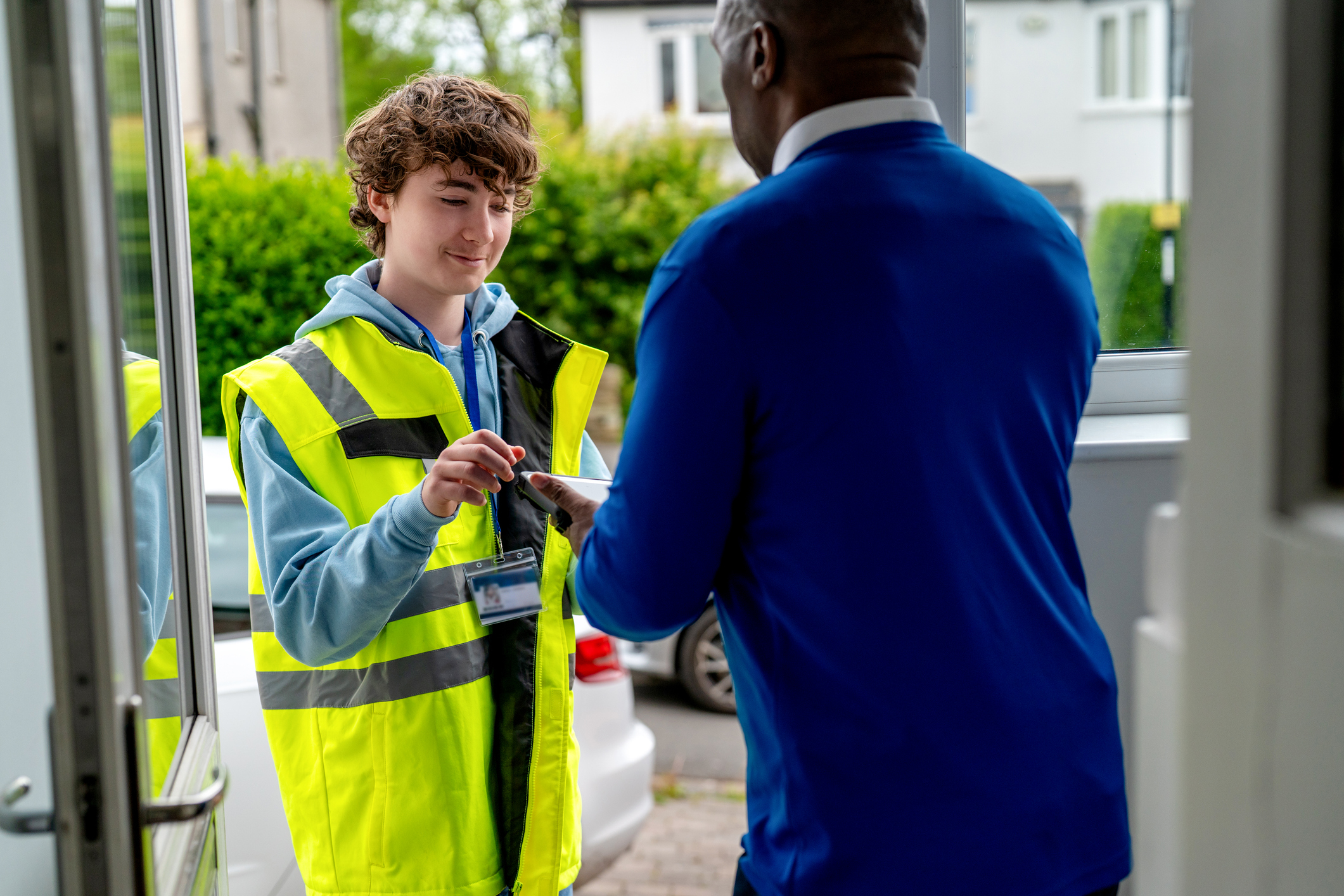
A delivery person in a yellow safety vest hands a package to a man at the door.GNG built on employer engagement structures that it already had in place across the region. Instead of creating a separate apprenticeship outreach strategy, it used job fairs, business advisory councils, its 14 career centers, and Career Connection Days to initiate and expand partnerships.



This approach let staff members tailor outreach to align with industry-specific and regional needs. Manufacturing employers were often familiar with apprenticeship models, whereas employers in retail, food services, and other sectors needed more education. GNG staff members emphasized apprenticeship’s practical value, including talent pipeline development and access to prepared candidates. Career Connection Days also let employers engage directly with participants and learn about the skills they had developed.

Embedding apprenticeship in existing employer-facing infrastructure made introducing and sustaining it easier. Employers could see it in practice through participant engagement and workforce programming. Meanwhile, GNG staff members refined regional strategies across rural, suburban, and metro communities.

Create a full support continuum for youth and young adults

GNG paired apprenticeship pathways with layered supports that began before placement and continued into retention. The organization strengthened recruitment and referral pathways through partnerships with organizations serving youth and young adults, including youth with records of arrest, conviction, or incarceration. It also delivered pre-employment and employability skills training within school systems to support workforce readiness before participants entered employment pathways.

Participants moved through a structured support process that included recruitment, intake, barrier assessment, training, placement support, mentoring, and retention services. Career pathway coaches provided ongoing support to help participants transition to employment and persist through apprenticeship training.

This continuum helped make apprenticeship more accessible for youth and young adults because support extended across the participant journey rather than focusing only on placement outcomes. It also strengthened the connection between workforce preparation, supportive services, and long-term employment support.

Expand apprenticeship through external industry growth and internal pathway-building

As GNG’s apprenticeship work matured, the organization pursued two related expansion strategies: growing pathways with external employers across new industries and occupations and creating additional opportunities within its own operations.

Externally, GNG expanded pathways in retail customer service, maintenance, clean technology, and facility services, including work tied to existing contracts to provide facility services in government buildings and school systems. Leadership also began exploring health care expansion in roles such as phlebotomist, pharmacy technician, and medical biller and coder. This growth required employer engagement strategies tailored to each sector. It also revealed where more employer education was still needed, such as in health care, where employers often expressed liability concerns.

GNG created apprenticeship opportunities within its internal operations through collaborative efforts involving departments such as facility services, donor services, and e-commerce. In contrast with efforts to persuade employers to adopt the apprenticeship model, this work depended on cross-department coordination, role design, and internal alignment around how apprenticeship could strengthen workforce pathways inside the organization.

Lessons learned
larger organizational strategy icon

Apprenticeship thrives when it is part of a larger organizational strategy and all staff members are engaged. Understanding and consistency around apprenticeship across teams strengthens employer engagement and helps organizations embed apprenticeship more fully within existing workforce operations rather than regarding it as a stand-alone initiative.

trust building icon

Intentional relationships and trust-building with employers leads to stronger engagement and participation, especially with rural and small employers. Rural and small employers often required additional relationship-building and apprenticeship education to be able to fully engage with the model. Using shared language, serving as a source of knowledge and information, and taking thoughtful approaches to building trust helped GNG to engage these employers in its apprenticeship work.

Labor market icon

Regional labor market conditions and employer culture shape which sectors are most ready for apprenticeship and how organizations introduce and sustain the model. Some sectors and employers are more apprenticeship-ready than others. Developing an understanding of regional labor market needs, the local apprenticeship landscape, and employer practices helped GNG prioritize and stage outreach effectively across the business community.

career navigation support icon

Strong career navigation and exploration supports help participants access apprenticeship programs and persist in them. Participant support systems for career navigation, mentoring, and retention helped GNG connect participants to appropriate programs and pathways. In turn, employer engagement efforts were strengthened because participating employers had access to prepared talent.

Looking Ahead

Goodwill North Georgia is focused on expanding apprenticeship pathways in health care and other emerging sectors. The organization continues to explore employer incentives and funding strategies that can support apprenticeship adoption and employer participation. There is also ongoing interest in sharing lessons learned and promising practices with other Goodwill organizations through technical assistance, peer learning, and national collaboration.

Taken together, these next steps reflect how GNG views apprenticeship: not as a fixed program but as an ongoing workforce strategy that will continue evolving alongside employer needs, participant pathways, and regional labor market opportunities.