Skip to content
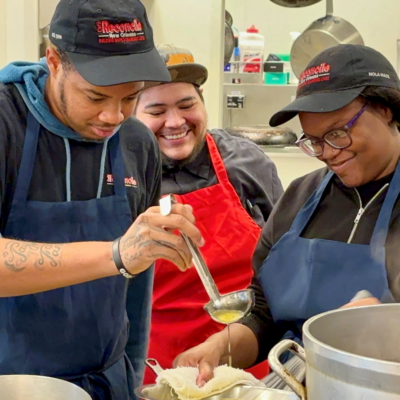
Three people in uniforms and aprons work together in a kitchen, with one person ladling soup while the others watch and smile.
Impact Story

Catalyst Kitchens:

Building a National Movement for Trauma-Informed Culinary Training

June 24, 2026

At a glance

This impact story highlights JFF’s partnership with Catalyst Kitchens to expand access to Registered Apprenticeship for youth and young adults and build a nationwide movement for trauma-informed culinary training.

Catalyst Kitchens supports a network of more than 100 community-based organizations across the United States that use culinary training through social enterprises as a pathway to careers for youth and young adults. What started as a consulting arm of FareStart—a Seattle-based nonprofit culinary training program—is now one of the country’s most dynamic national intermediaries for workforce development.

In 2022, Catalyst Kitchens became an independent nonprofit and formalized its role as a national intermediary. This move was driven by growing demand from local community-based and youth-serving programs seeking connection to best practices and to each other so that culinary job training models could thrive in every community. Today, Catalyst Kitchens provides network members with training, curricula, technical assistance, peer learning, and in-person events. Its mission is clear: to improve outcomes for youth and young adults by strengthening the programs closest to them.

The organization’s work spans the full arc of workforce development, from program design and implementation to career pathway development, employer partnerships, and connections to pre-apprenticeship and Registered Apprenticeship programs. At its core, Catalyst Kitchens is working to change the culture of the culinary industry itself, by advancing practices and approaches that foster belonging and well-being, human-centered approaches to work and training, and the removal of barriers to participation and advancement, especially for youth and young adults.

Strengthening the Field Through Partnership

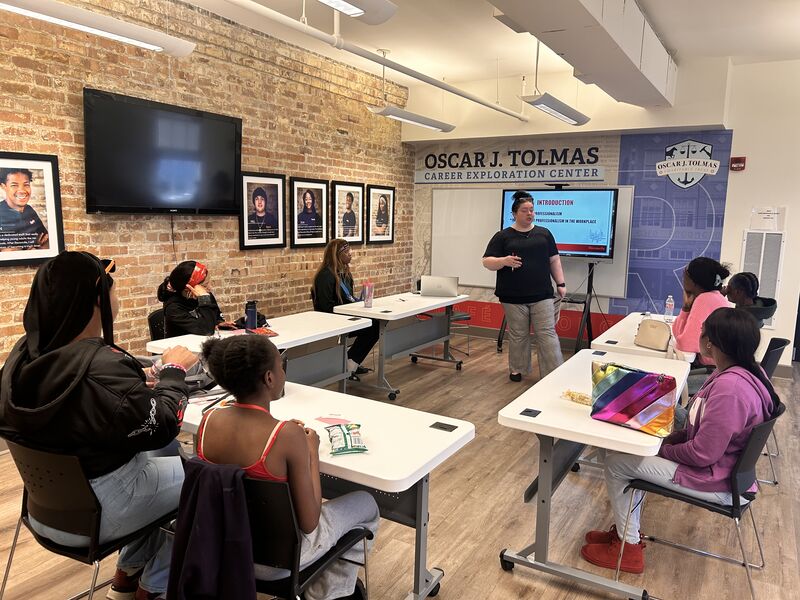
A teacher stands at the front of a classroom speaking to students seated at desks in the Oscar J. Tolmas Career Exploration Center.Catalyst Kitchens’ national intermediary journey has been significantly shaped by its partnership with Jobs for the Future (JFF). In 2019, through an Apprenticeship Expansion and Modernization Fund contract funded by the U.S. Department of Labor, Catalyst Kitchens (then FareStart) partnered with JFF to expand access to Registered Apprenticeship programs for opportunity youth. This collaboration included program design support and registration, and the delivery of coaching and technical assistance to drive the adoption of youth-centered practices. Now, as a grantee of JFF’s Department of Labor-funded Apprenticeship Building America (ABA) grant, Catalyst Kitchens is refining its work in this space and expanding its efforts to support more programs across its national network.

Through JFF’s training, coaching, and ABA community of practice, the organization built the internal capacity and systems needed to scale high-quality practices across its network. The partnership strengthened pathways from pre-apprenticeship to employment and Registered Apprenticeship, advanced employer adoption of youth-centered hiring strategies, and deepened Catalyst Kitchens’ connections to state and national apprenticeship systems. Perhaps most importantly, the relationship has helped the Catalyst Kitchens team build knowledge and relationships that can now be expanded—and sustained—across affiliate programs nationwide. Over the past year, this collaboration has supported the organization and its affiliates in achieving the following outcomes:

271
youth and young adult served
244
youth and young adults enrolled in pre-apprenticeships
167
youth and young adults completed their pre-apprenticeship programs
40
youth and young adults enrolled in Registered Apprenticeships

Trauma-Informed Training That Changes Practice

At the heart of the Catalyst Kitchens model is a rigorous, deeply human commitment to trauma-informed and youth-centered practice. This is not an ancillary practice but core to the program’s infrastructure and approach. The organization provides robust training built around five pillars:

Safe spaces to learn, where emotional security is a prerequisite for skill-building

Wraparound supports that address the real-life barriers young people face

Youth voice and empowerment, ensuring that participants are active agents in their own development

Trauma-informed leadership, with staff members modeling the practices they have learned

Holistic wellness support, with staff members attending to the whole person, not just their job readiness

Training is delivered through individual coaching, peer learning, and the Building Better Kitchens workshop, a regional event that brings together local programs, instructors, and food-service professionals for collaborative, hands-on learning. This model allows affiliate programs to absorb and adapt best practices in ways that fit their unique communities, participants, and labor markets.

Spotlight: Reconcile New Orleans
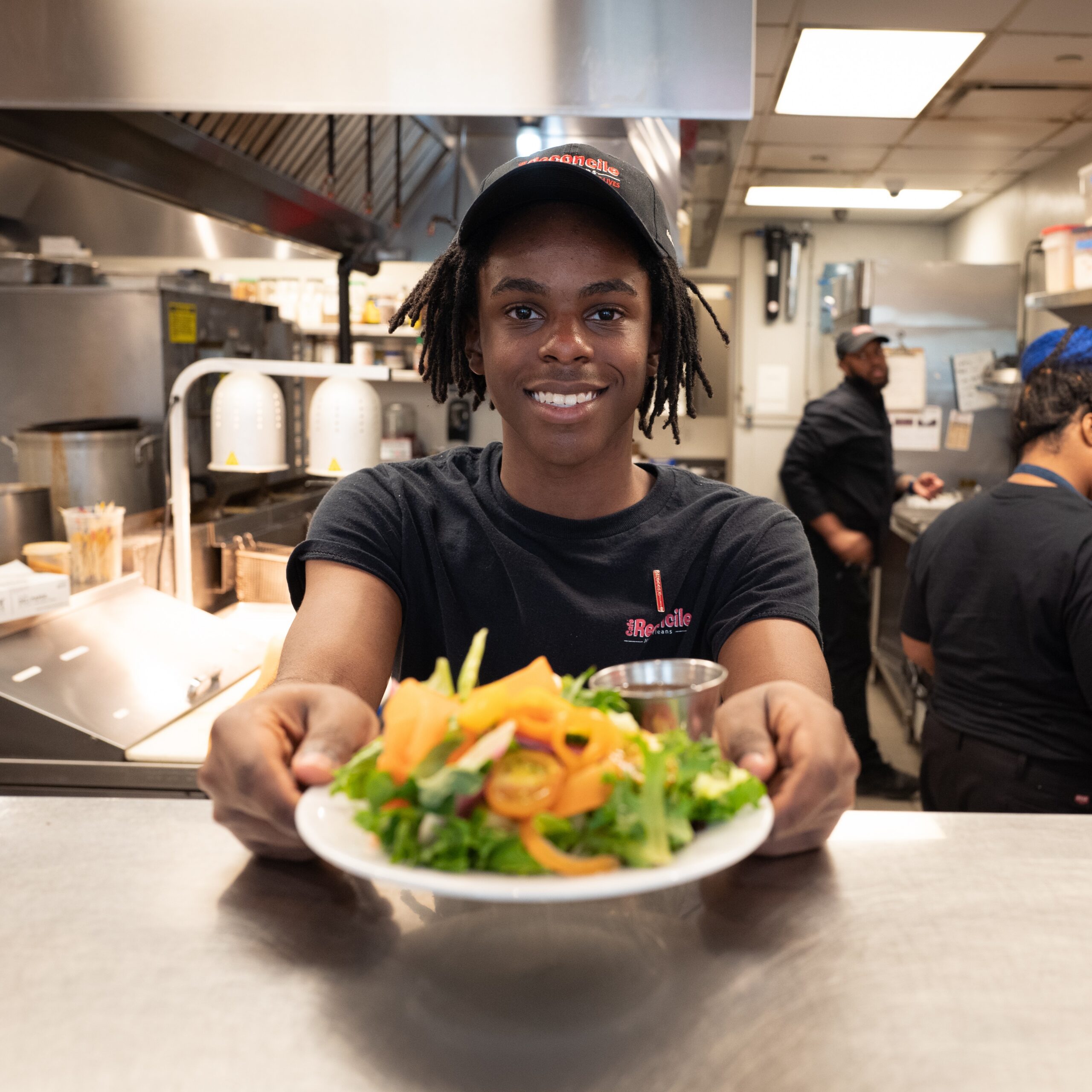
A restaurant worker in uniform smiles and holds out a plate of fresh salad across the counter in a busy kitchen.Reconcile New Orleans exemplifies what trauma-informed culinary training looks like in practice. A Catalyst Kitchens affiliate, Reconcile serves more than 130 youth and young adults in the greater New Orleans area each year, offering both pre-apprenticeship and Registered Apprenticeship opportunities. Its approach goes well beyond teaching culinary skills: Participants engage in career navigation and exploration, self-reflection, and leadership development, building not just their employability but their confidence, agency, and sense of self.

Reconcile deliberately weaves social-emotional learning and life-skills training alongside technical training and work-based learning. The result is a program where trust, belonging, and readiness are built together—and where young people arrive at job placements truly prepared for what comes next.

What makes Reconcile’s model especially powerful is its approach to employer engagement. Employers are not passive recipients of program graduates; they are active partners. They participate in the design of training, attend their own workshops on youth-centered practices, and are encouraged to adopt hiring and mentorship approaches that foster safety and belonging. Reconcile engages employers through site visits, employer-led workshops, mock interviews with program participants, and shared feedback tools. The payoff is measurable: Participants enter the workforce with greater readiness and confidence, and employers that have embraced these practices see stronger retention and more meaningful mentorship.

  • 61 youth and young adults served
  • 61 youth and young adults enrolled in pre-apprenticeships
  • 45 youth and young adults completed their pre-apprenticeship programs
Four Lessons That Can Move the Field Forward

The work of Catalyst Kitchens and programs like Reconcile New Orleans offers hard-won insights for any organization working to improve outcomes for youth. Here’s what the field can learn from their experiences:

Peer Learning Icon

Hands-on peer learning is how practice actually changes. When affiliated programs learn alongside one another—collaboratively, regionally, and in real work environments and contexts—they can adopt and embed new practices while tailoring them to their own communities.

Employer Engagement Icon

Employer engagement is long-term work—and it’s worth the effort. Helping employers adopt trauma-informed and youth-centered practices requires sustained investment, not a single training session. But when employers make that shift, the downstream effects are real: stronger retention, better mentorship, and young people who feel like they belong.

ROI Icon

Return on investment is the language that moves employers to act. Values alone rarely drive organizational change. When programs can clearly articulate the business case—reduced turnover, lower hiring costs, and stronger team cohesion—they give employers the rationale they need to move from interest to commitment.

Youth Voice

Youth voice isn’t a checkbox. It’s a quality driver. Programs that authentically incorporate youth perspectives into the design of pre-apprenticeship and Registered Apprenticeship opportunities consistently deliver stronger outcomes. Young people know what they need. When the ability to listen and respond is built into a program’s structure, the quality of programming improves, and so do the lives of participants.

Catalyst Kitchens demonstrates what it looks like when a national intermediary takes both the structural and the human dimensions of workforce development seriously. By equipping local programs with the tools to train trauma-informed leaders, engage employers as true partners, and center youth voice, they are not just improving individual outcomes—they are changing the culture of an industry.


Related Content