
Case Studies: Dual Enrollment Work-Based Partnerships Thrive in Tennessee
October 23, 2025
At a Glance
Dual enrollment work-based courses allow high school students to gain college credit and practice workplace skills at the same time. These case studies demonstrate the model in action across Tennessee through a pilot supported by Jobs for the Future (JFF).
Dual enrollment work-based courses (DE-WBCs) enable high school students to simultaneously experience college-level courses, gain college credit, and practice workplace skills.
Traditionally, dual enrollment courses are taught in a classroom by a college instructor or a high school teacher qualified to teach college courses. The DE-WBC model breaks that mold, with students spending at least 20% of the course at the workplace with an employer, while the remaining 80% of learning is conducted in a classroom.
Supported by Jobs for the Future (JFF) in collaboration with the Tennessee Department of Education and with funding from the U.S. Department of Education, a group of high schools, colleges, and employers tested the DE-WBC model throughout the state on over 600 high school students. The courses applied the model to dual enrollment STEM and computer science courses, and the partnerships found innovative ways to adjust to local context, student needs, and hurdles along the way.
Case Study: Millington
A repair program boosts student experience and reduces district costs

The Millington Student Repair Academy helps high school students gain hands-on technical skills in Chromebook repair while earning industry-recognized certifications. Developed in partnership with Vivacity, the program reduces the district’s technology maintenance costs while preparing students for IT and repair-related careers. The program creates cost savings for the district, with students completing in-house repairs that save $20 per computer for the entire district, effectively lowering future Chromebook expenses and reducing the need to purchase new devices. Participants receive a $600 stipend per semester, offering financial support in addition to valuable professional experience.
Case Study: Southwind
A trusted community member assists with recruitment
Southwind High School partnered with Southwest Tennessee Community College to offer a Mechatronics dual enrollment work-based course, providing students with hands-on experience in basic electrical components and systems.
Initially, low enrollment numbers threatened the program’s sustainability. To address this, the school collaborated with the football coach, a trusted mentor with strong connections to students and families in the community. His outreach efforts tripled enrollment within days. Now, thanks to word-of-mouth enthusiasm about the engaging learning experience and financial compensation, the course consistently fills up every semester, with a waitlist.
Case Study: Oak Ridge High School
Profit-sharing recognizes student skills, commitment, and leadership
Oak Ridge High School connects high school students with local industry partners to design, prototype, and produce real products that address client needs in their Wildcat Manufacturing dual enrollment work-based courses. Students collaborate directly with industry partners to iterate designs, manufacture products, and fulfill real orders, such as agricultural seed box openers manufactured for sale in Tractor Supply stores. Proceeds are reinvested into the program for materials and supplies, with a portion shared with students through a profit-sharing model that considers time spent, technical contributions, roles played, and leadership.
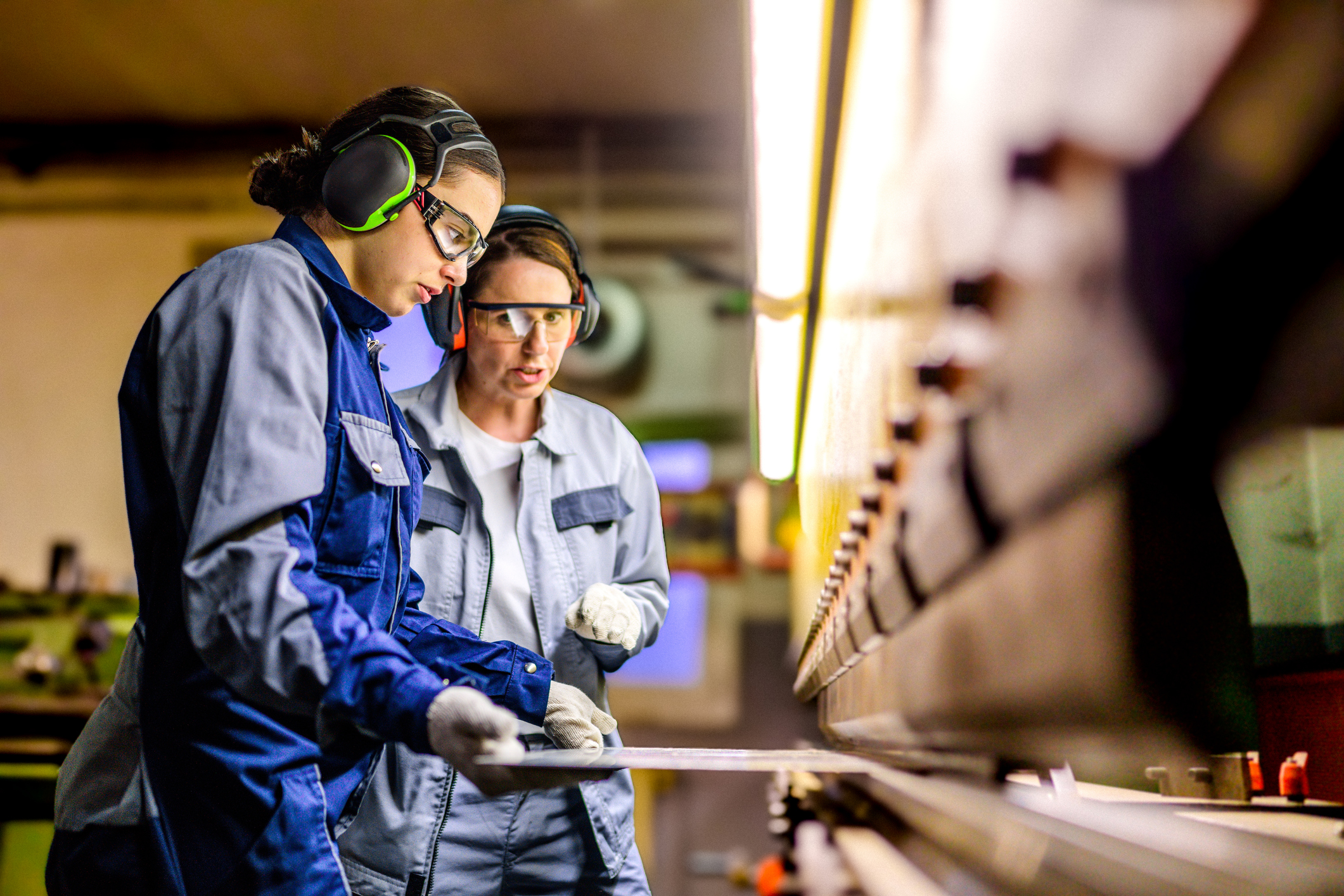
The profit-sharing model was established through a multi-phase planning process involving Oak Ridge’s finance director, legal team, teaching and learning leaders, and the local education foundation. The team developed criteria for profit distribution based on student time, production, quality, role, and leadership. To manage payments and compliance, the team engaged with the executive director of finance, legal counsel, and the education foundation. An MOU between the school and foundation is currently in development to formalize the process and create a sustainable payment mechanism. Moving forward, employer payments will be routed through the foundation or a third-party organization, which will disburse funds to students in the form of scholarships.
Case Study: John Overton High School
Embedding college instructors at high schools increases access, reduces costs
John Overton High School has launched a dual enrollment work-based course (DE-WBC) that embeds a Tennessee College of Applied Technology (TCAT) Nashville instructor at the high school. The instructor’s salary is sustained by dual enrollment state funds channeled through TCAT Nashville and they are treated as a full member of the high school community, attending academy meetings, professional development sessions, and business partner gatherings, while focusing on teaching and grading responsibilities.

This model required strong coordination between John Overton High School and TCAT Nashville, including a contractor designation for the instructor to ensure access to facilities and learning systems at the high school, and a formal memorandum of understanding (MOU) covering materials and logistics. The partnership has led to measurable gains: increased student enrollment in dual enrollment courses and higher postsecondary matriculation rates to TCAT Nashville, which enhance the school’s standing and attract prospective families. The instructor arrangement for this course reduces financial burden on the school’s budget, removes transportation barriers for students, and has proven scalable and adaptable. John Overton High School has extended the approach to its HVAC program by certifying in-house teachers as TCAT faculty, further lowering costs.
When it comes to preparing students for career success, John Overton High School is leading the way: The school’s dual enrollment work-based courses are also spotlighted in JFF’s newly released Work-Based Learning Framework. Their approach reflects the framework’s quality indicators—showcasing how high-quality programs can equip students with the real-world skills, experiences, and supports that set them up for lasting career success.
Case Study: Bartlett High School
A commitment to organization sustains health care work-based learning
At Bartlett High School in West Tennessee near Memphis, a dual enrollment work-based course in health science offers students real-world clinical experience. Central to the success of clinical rotations are strong, collaborative partnerships with four local health care employers, including two that are available onsite at Bartlett High School.
These clinical rotations give students the opportunity to shadow health care professionals in a wide range of settings, including various departments at a hospital, an outpatient rehab facility, and the high school itself. Most students rotate through 12 departments at Saint Francis Hospital, such as radiology, the emergency room, and wound care. Another employer partner, Campbell Clinic, and the high school nurse offer rotations conveniently located on campus.
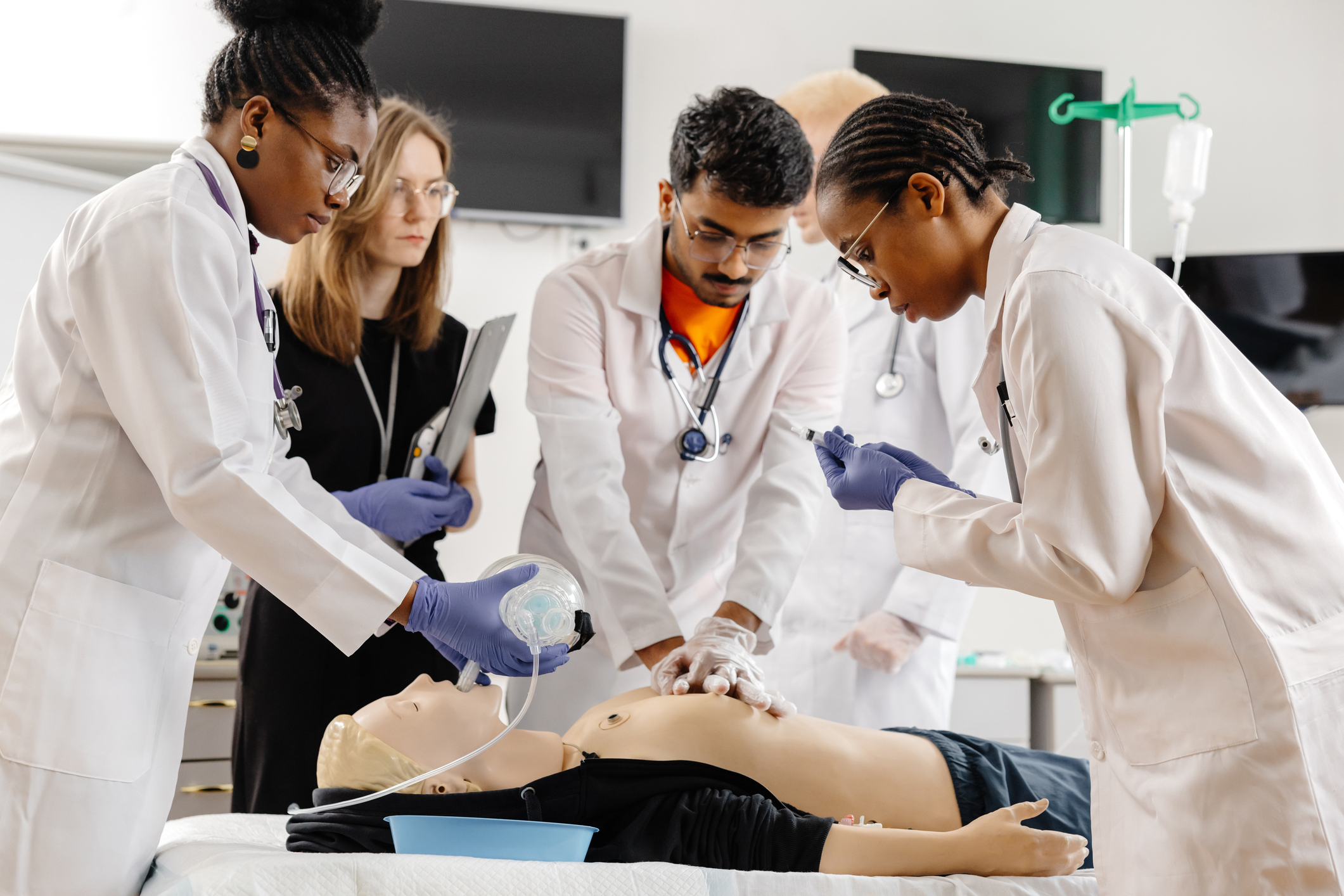
Students participate in clinical rotations two days per week in a variety of hospital departments and clinical settings throughout the school year. Before beginning clinical rotations in their senior year, students earn OSHA 10 and CPR certifications and have the option to sit for the Certified Clinical Medical Assistant (CCMA) exam after completing the course. Bartlett High also has agreements with three local postsecondary institutions (a technical college, a community college, and a four-year university), allowing students to transfer their earned college credit to one of the institutions. These postsecondary institutions either award credit for completing the course or earning industry certifications.
Teachers give each student participating in clinical rotations a notebook at the start of the year with timelines, instructions for completing necessary paperwork on time, and space for journaling during clinicals. After noticing past journal entries lacked detail, they created a structured journal template to provide more clarity to students as they reflect on what they observe. In the 2025-26 school year, the teachers started providing students with a checklist of what they should be observing in each department to complement the journal template – for example, what were the medications you observed staff administering to patients in IV bags? These tools not only guide students’ reflections and skill development but also help employer mentors understand what students are expected to observe and learn during their rotations.
Case Study: Alcoa High School
Employer-instructor collaboration offers strong academic support

Students at Alcoa High School participate in an asynchronous online dual enrollment Help Desk course, supported by a high school instructor. During their free periods, students work at the Help Desks at both the high school and middle school, assisting with computer troubleshooting. They typically work 5–7 hours per week and are compensated for their time. The Alcoa High School DE-WBC model has evolved over time. In the first courses, high school staff didn’t have direct access to course content or student grades, and some students were falling behind.
Through regular check-ins and open communication, the Director of Career and Technical Education (CTE) and the Help Desk manager developed a collaborative solution: students were asked to show their course portal when submitting their weekly timesheets. The Help Desk manager then recorded each student’s grade and any missing assignments on the timesheet, which the CTE Director could access to help address any academic concerns. All students completed the course moving forward.