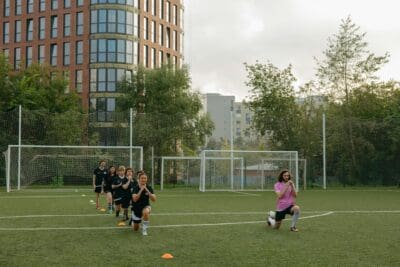
Anne Shadle, vice president of performance science at HITE EQ, brought a background in performance psychology to her perspective on sports skills translation. She underscored the importance of traits like self-discipline and emotional regulation, cultivated through sports, and how they can support functioning in high-pressure work environments such as the military or special operations. Shadle also discussed her work in conducting early interventions with high school and college athletes to use sports for positive social change, enhancing emotional and cognitive flexibility, teamwork, and discipline to benefit broader societal and professional contexts.
Ellen Flaherty, director of learning at Unity Technologies, brought her experience as a collegiate basketball player to the virtual table. Along with preparing her with the invaluable time management and prioritization skills developed by student-athletes, basketball offered an analogy for skills development and articulation, especially when it comes to technology skills. Flaherty explored how to apply a sports framework for the teaching and learning of technical skills, emphasizing the “micro-skills” and competencies that require practice to hone holistic skills. “You’re teaching how to dribble a ball for the first time, and that’s how we need to teach tech to people who are coming to our software for the first time, as well.”
Despite widespread participation in sports, most athletes do not transition to professional athletic careers. The National Collegiate Athletics Association (NCAA) estimates that out of one million high school football players, just 3% go on to play at the Division I level. The odds of becoming a professional or Olympic athlete are even lower: the same NCAA research found that in a survey of seven popular sports, the chances of going from college to pro ranged from .5% to 7%.
Randy Osei, CEO of Athlete Technology Group, reflected on his personal experiences, sharing that his journey toward entrepreneurship began when an injury hindered his professional athletic aspirations. Turning to coaching, then brand and business management, Osei observed firsthand professional athletes’ often-short career spans and was driven to prepare athletes for life beyond sports by bridging the knowledge gap and facilitating transitions into technology and entrepreneurship. Osei’s experience underscores the importance of preparing athletes for the future of work and leveraging their sports-derived skills in new professional contexts.
The discussion also touched how emerging technologies and shifting regulations have opened up new opportunities for collegiate and amateur athletes. For decades, student-athletes were prohibited from earning any income related to their sports participation, but since 2021 they have been allowed to benefit from Name Image Likeness (NIL), which allows them to create and monetize a personal brand. Panelists explored potential uses for NIL as a pioneering “earn-and-learn” model affecting college athletes in acquiring financial literacy, career readiness, and entrepreneurship training. Osei outlined some of these opportunities for athletes, citing NIL as a way to develop entrepreneurship, marketing, sales, and business development skills, and to bridge the gap for athletes as they transition into life after sports. Flaherty highlighted the positive impact of NIL on women athletes and sports that receive fewer resources and attention, noting that NIL has provided these athletes with increased visibility, recognition, and a platform to amplify their voices.