
Reaching the Goal of One Million Apprenticeships
May 26, 2026
At A Glance
Apprenticeship has long connected workers to opportunity and employers to talent. This brief analyzes the current slowdown, top growth opportunities, and actionable steps to reach one million apprentices.
For more than a decade, expanding Registered Apprenticeship has been a consistent, bipartisan workforce priority in the United States. Under the Obama administration, efforts focused on “doubling and diversifying” Registered Apprenticeships to open pathways into a wider range of industries and for a broader population of workers. The Biden Administration continued and built on that approach, emphasizing expanding access, sector expansion, and stronger connections between apprenticeship and emerging economic priorities. Today, the Trump administration has set a new benchmark—aiming to reach one million active apprentices nationwide—framing apprenticeship as central to ensuring that American workers capture the jobs being created by domestic reindustrialization and AI deployment.
Across these administrations, the rationale for investing in apprenticeship has remained largely consistent. Registered Apprenticeship offers a proven “earn-and-learn” model that equips workers with employer-validated skills, supports wage progression, and avoids student debt. Its track record—spanning more than 80 years—has demonstrated strong outcomes for both workers and employers, including higher earnings, improved retention, and reliable talent pipelines. These strengths have made apprenticeship an appealing policy lever for addressing persistent workforce challenges, from skills gaps in construction and manufacturing to the need for talent in emerging and technology-driven sectors.
As economic conditions evolve and political environments change, apprenticeship has been repeatedly positioned as a practical solution to connect workers to opportunity while helping employers fill critical roles. The current push toward one million apprentices reflects the latest phase of a long-running national effort to scale a model that has consistently delivered results but has been challenging to scale to the levels that policymakers have sought. This brief provides JFF’s analysis of where the current slowdown is coming from, which states and sectors present the largest growth opportunities, and what specific actions — all achievable within existing authority and aligned with the President’s executive order — can accelerate the path to one million.
What the Administration Has Already Set in Motion
To meet the “One Million” goal, the Administration has taken a number of significant steps:
- Executive Order 14278 established the one million apprentice goal, challenged the “college for all” orthodoxy, and directed federal investments to align with apprenticeship growth.
- Deliberate funding strategies, including:
- Nearly $84 million in state apprenticeship grants went out the door, placing a greater emphasis on the leadership role of Governors.
- $30 million in an industry-Driven Skills Training Fund targeting high-demand industries including skilled trades, AI, and maritime.
- Deliberate funding strategies, including:
- And the recent Pay-for-Performance FOA — up to $145 million in outcome-based cooperative agreements across shipbuilding, AI/semiconductor, IT, healthcare, transportation, and telecommunications — is a significant new direction in federal apprenticeship investment.
- The March 9 sub-regulatory guidance package (Circulars 2026-01, 2026-02, and 2026-03, plus Bulletin 2026-35) addresses program design flexibility, state agency roles, and completion rate transparency, and committed ETA to a 30-day registration determination —responding directly to one of the most frequently cited barriers to new sponsor formation.
- And finally, recently announced additional resources to expand the network of industry and AI related intermediaries are critical steps in supporting the broader apprenticeship eco-system.
Challenges to Reaching 1 Million Apprentices
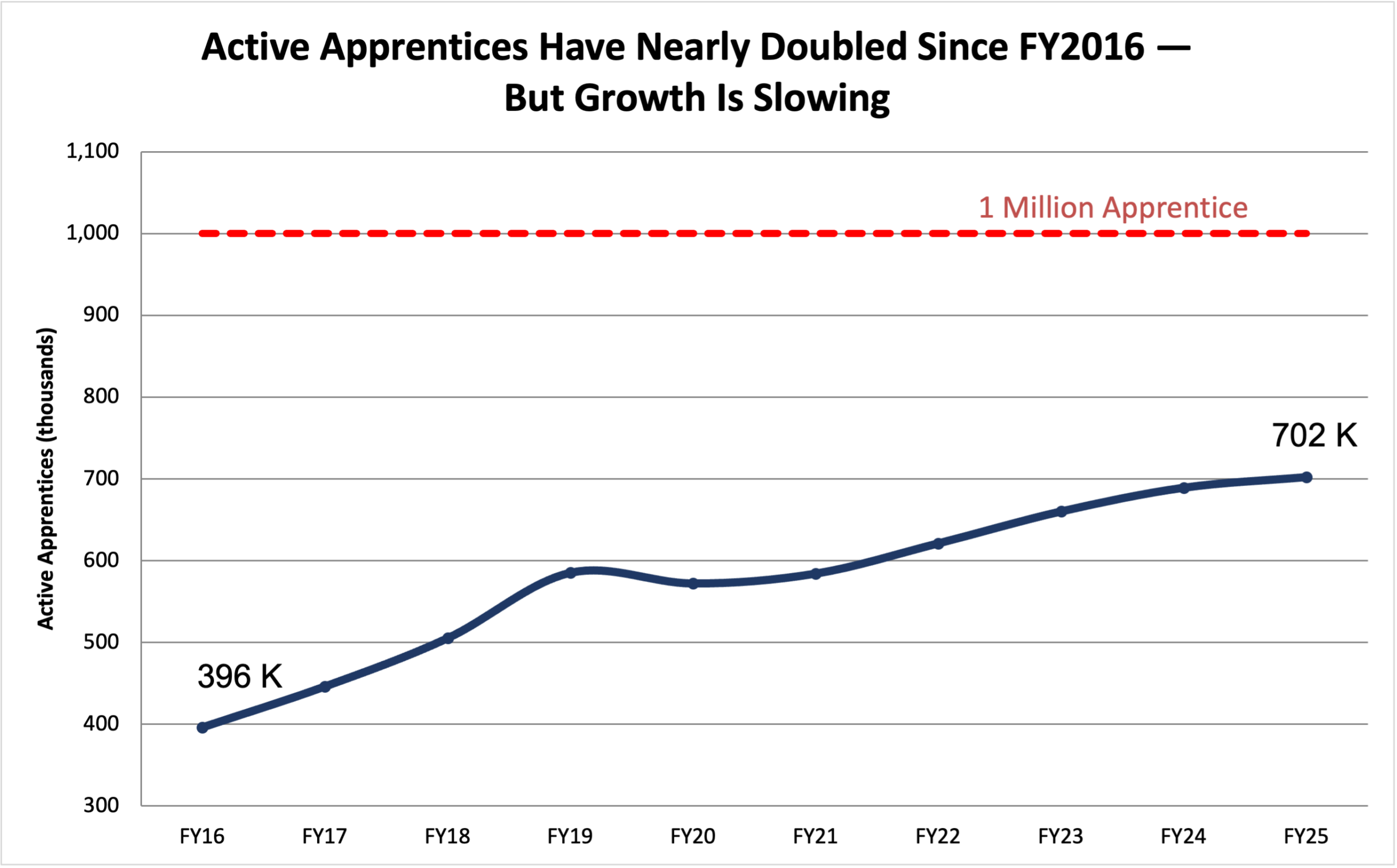
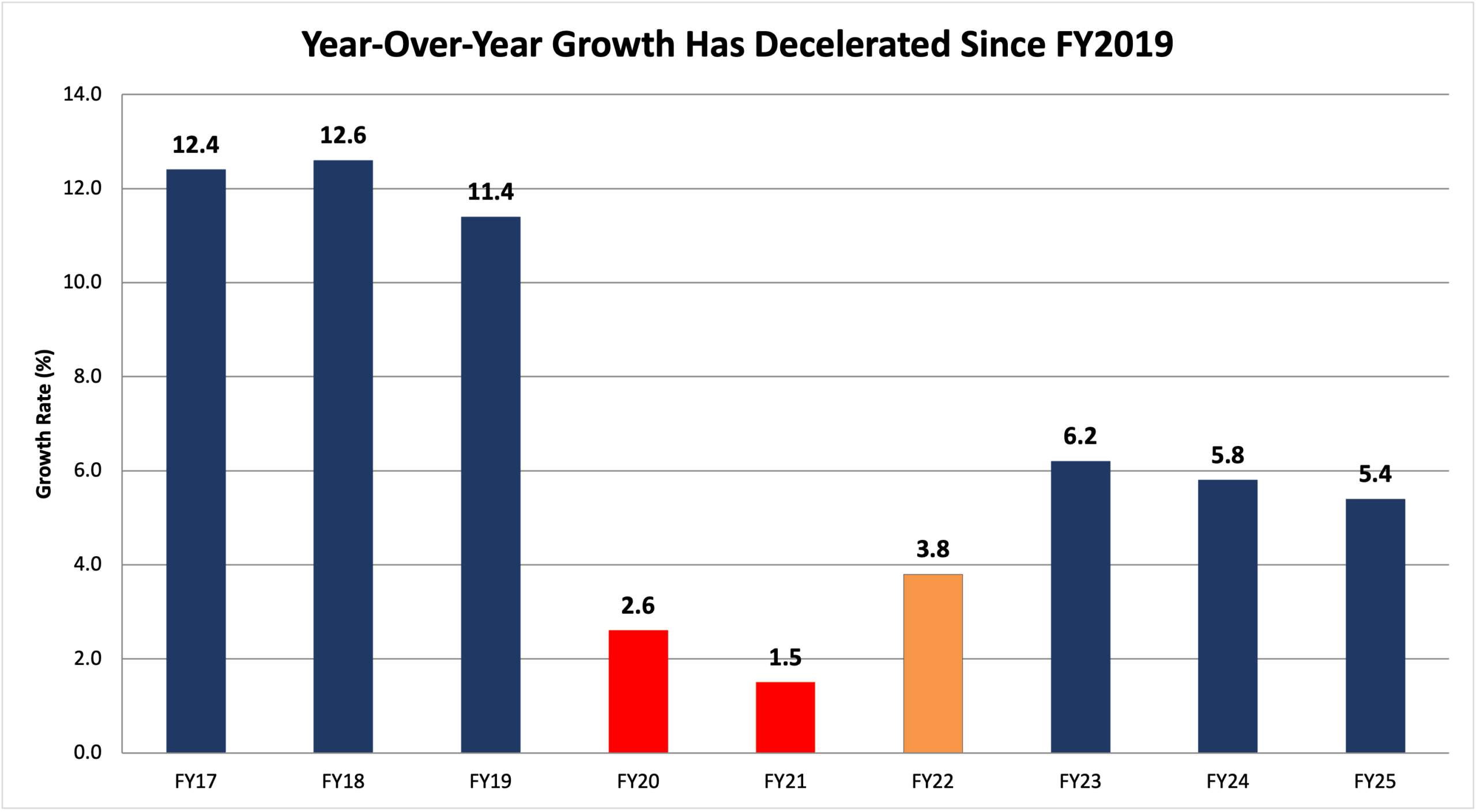
National Trend: Deceleration and Plateauing (Figures 1 & 2)
While progress has been made and these actions are promising initial steps – the U.S. is still not at the scale needed.
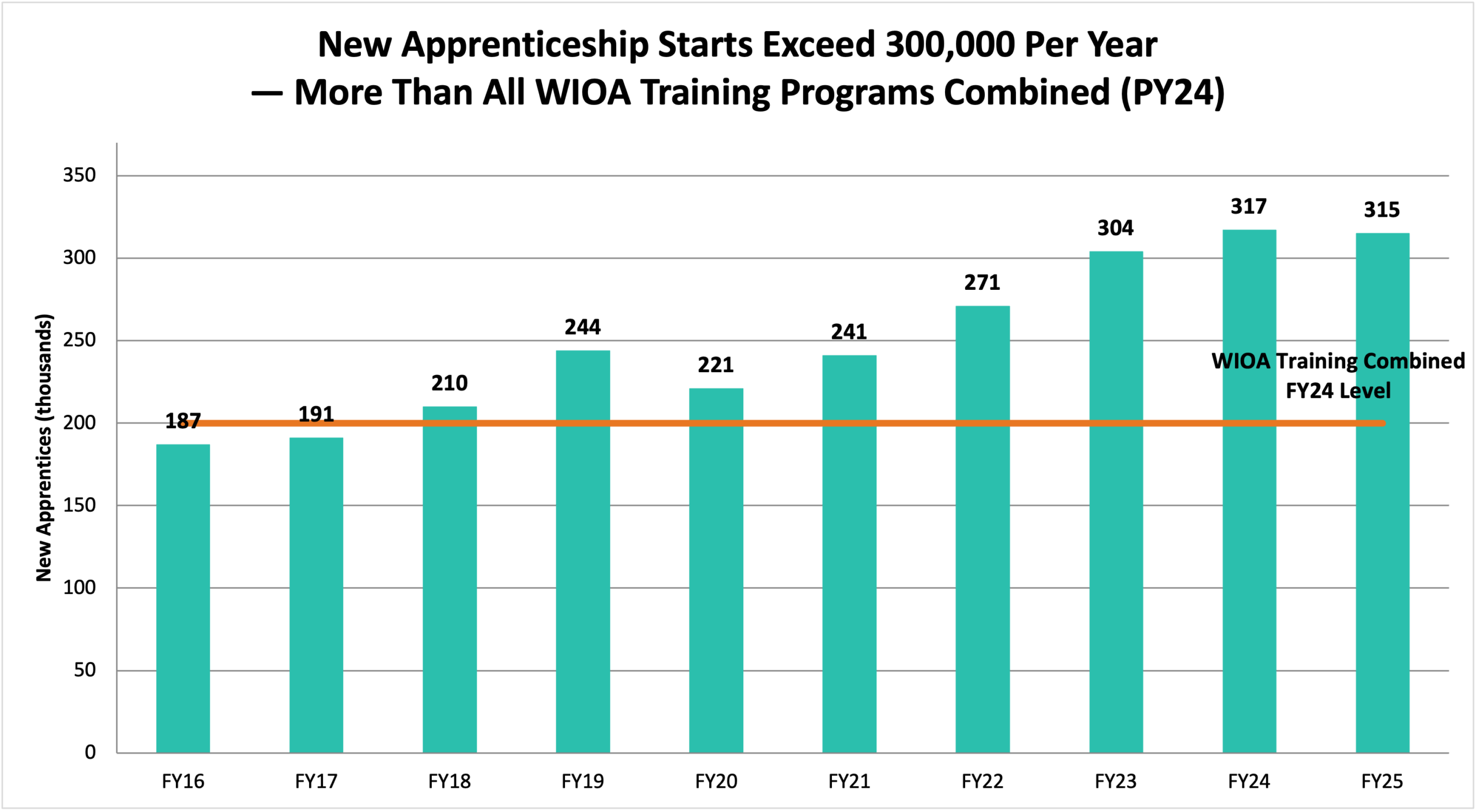
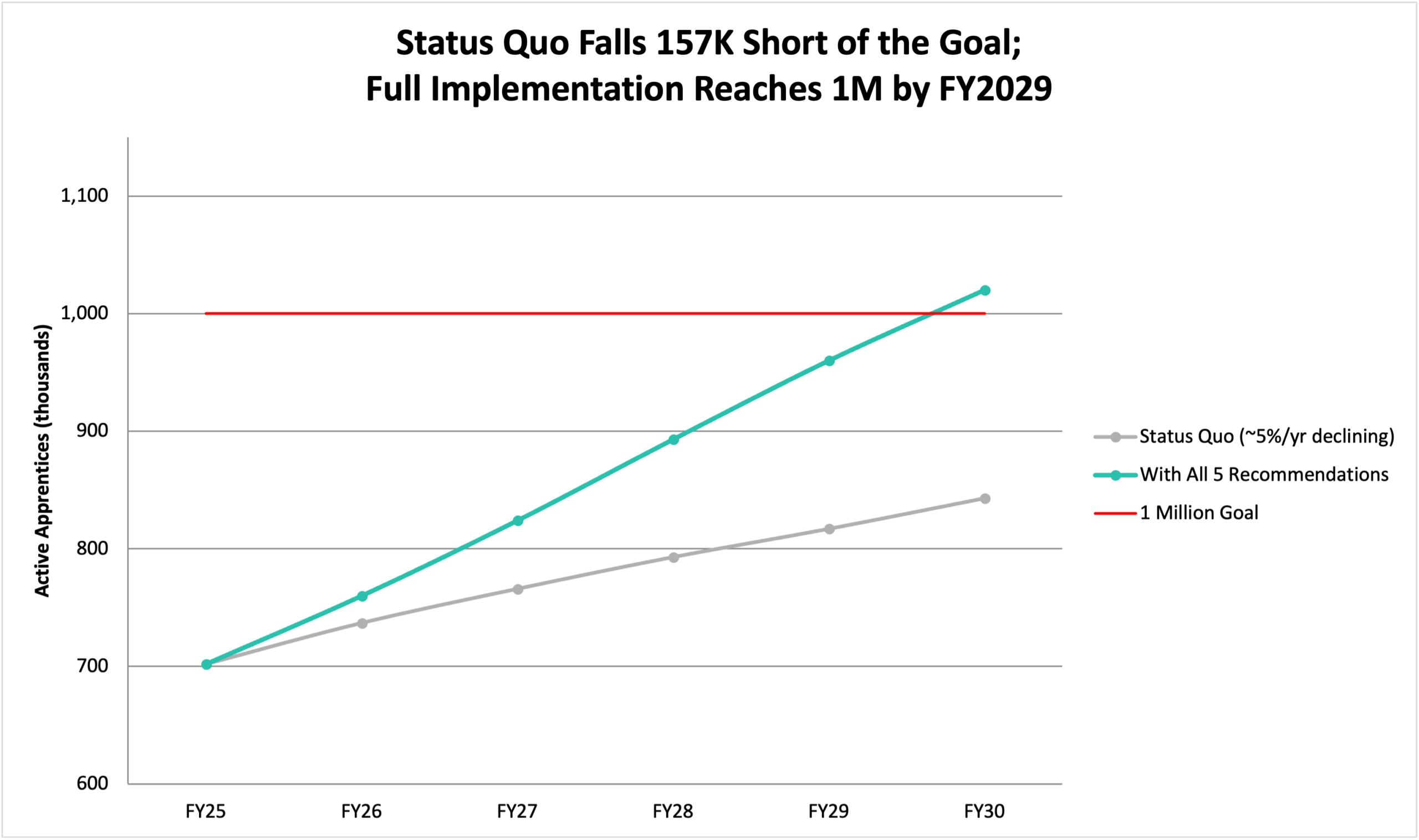
The growth of the RA system over the past decade has been remarkable. Registered Apprenticeship alone is the single largest training delivery system overseen by ETA, providing training to more individuals each year (300,000+ new apprentices annually) than all of WIOA Adult, Dislocated Worker, and Youth programs combined (fewer than 200,000 receiving training in PY24 based on data provided by DOL) and likely more than all of ETA managed programs combined. But now the growth of the Registered Apprenticeship system is plateauing. Active apprentice counts grew at least 10% annually from FY2015 through FY2019 before being impacted by COVID when rates compressed to 2–4% per year from FY2020–FY2022. Post-COVID, year-over-year growth peaked in FY23 at 6.2% and is declining by almost 0.4% each year. At current trajectory, the system reaches only ~850,000 by FY2030 — over 150,000 short of the President’s goal (Figure 8).
State Trends: Three Patterns That Explain the Slowdown (Figures 3 & 4)
While the vast majority of States have driven national growth achieving near or surpassing the national average over the past decade, some states are being left behind or missing opportunities for even greater growth. In reality, the national deceleration is not uniform — it is occurring with 3 distinct state-level patterns, each requiring a different response.
Left Behind Cohort. The first cohort is states with little, no, or negative absolute growth, where active counts have remained essentially flat despite continued federal investment and rising employer demand. At least 4 States fit this profile with 3 of those States actually have fewer apprentices today than in 2016. These states have likely reached the limits of their current sponsor and program base without adopting new strategies, such as expanding into new occupations, engaging additional sectors, or bringing in new sponsors.
Need to Catch Up Cohort. The second category includes states with well below-average absolute growth relative to the national benchmark (77% since FY16) despite established apprenticeship infrastructure and long-standing sponsors have seen more gradual expansion even with expanding economic needs. At least 6 States reflect these patterns with steady but more measured progress (less than half of the national average) that may benefit from continued efforts to expand into emerging sectors and scale alongside changing workforce demand.
Further Room to Grow Cohort. The third category includes those states with strong absolute growth that nonetheless remain well below their workforce penetration potential. These typically larger states have seen meaningful increases in active apprentice counts in recent years, supported by continued economic expansion and sustained demand across construction and other key sectors. However, when measured against the size of their labor forces, participation remains relatively low—each falling well short of the national benchmark of roughly 4.2 apprentices per 1,000 workers. Despite their scale and growth, these states still represent significant opportunity that if they were operating at the national workforce penetration rate, they would account for tens of thousands of additional apprenticeship seats. At least four States reflect these dynamics, combining substantial growth over the past decade with substantial remaining capacity to further expand and build on these efforts.
Sector and National Dynamics: Where Growth Has Stalled (Figure 5)
The Administration’s stated priorities — manufacturing, construction, AI/tech, and other skilled trades — are exactly the sectors where RA growth has been slowest relative to need:
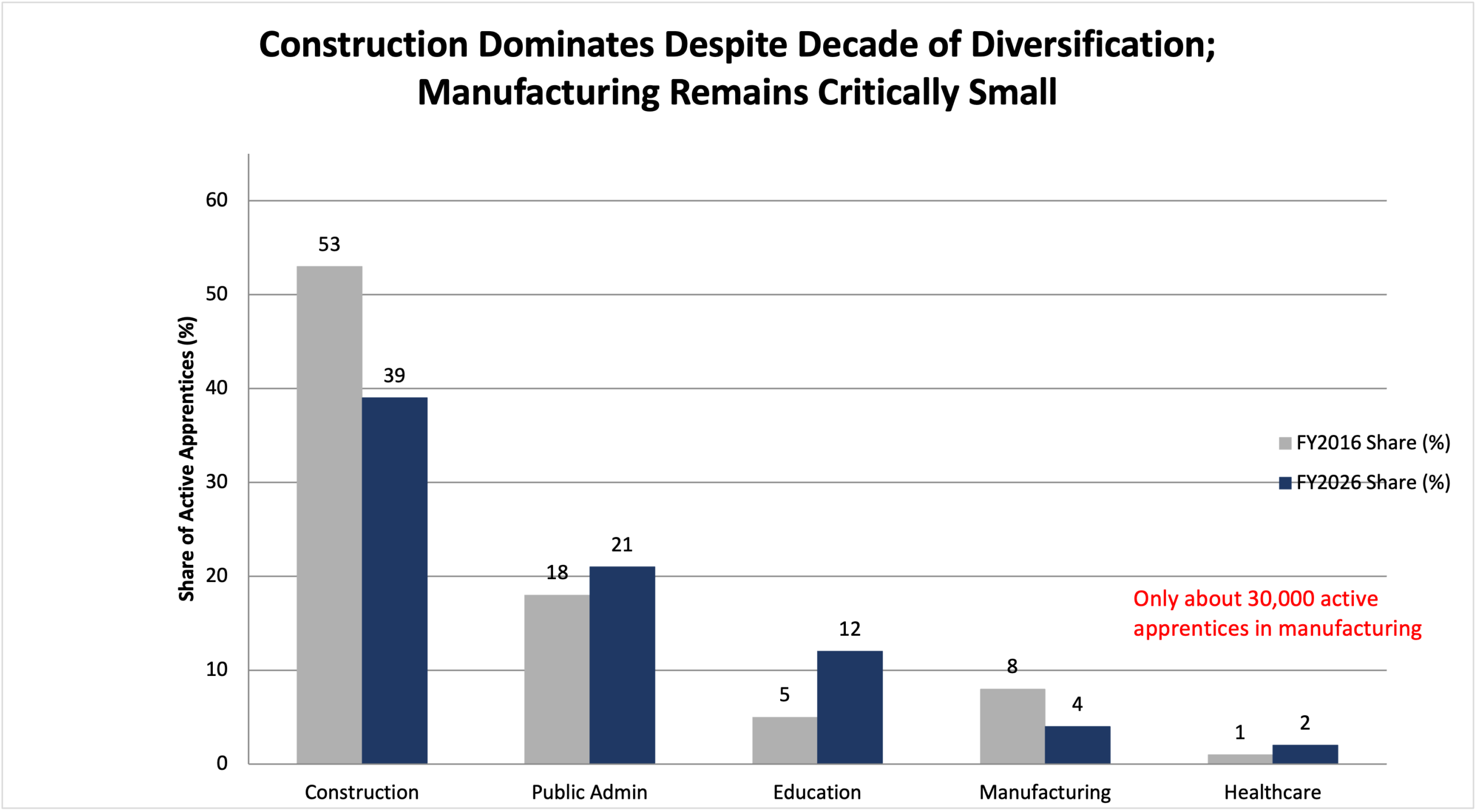
- Construction: While likely under-reported in the data, apprentices in construction and extraction-related occupations is still the largest SOC cluster of occupations at 46.8% of all active apprentices (down from over 53% in FY2016). The building trades union infrastructure that powered earlier growth is mature and growing more slowly than the system as a whole (48% compared to 77%). Non-union construction expansion into RA is growing (including year over year growth of over 17% in the last two years) but overall penetration is still limited at approximately 85,000 active apprentices. Yet the White House has identified a shortage of 447,000 construction workers — the largest single workforce gap in the country.
- Manufacturing: The Administration’s reshoring agenda, CHIPS Act investments, and tariff policies are designed to bring manufacturing back to America. But RA has shown modest growth in the manufacturing industry over the past decade, and there are only approximately 30,000 active apprentices in the sector (significantly less than 1% of the manufacturing workforce). The new national manufacturing fund has the potential to incentivize more manufacturers seeking new talent pipelines, but additional support is likely needed.
- AI/tech and cybersecurity: Growing rapidly in absolute terms but from a tiny base and facing competition from alternative credentialing strategies. DOL’s AI Action Plan mandate creates a direct hook for expanding RA in these occupations and DOL’s plans to fund an AI in Registered Apprenticeship Technical Assistance Center can accelerate that process.
- Healthcare and education: These sectors represent success stories — healthcare is up over 800% since FY2015 and teacher apprenticeships now in 46 states — but still small as a share of total volume.
Finally, national apprenticeship programs registered by USDOL represent an underutilized mechanism that is attractive to large employers operating in multiple states and industry associations that have the capacity to operate multi-employer apprenticeship programs at a national scale. Not including USMAP, national programs as a whole now rank 3rd in terms of the number of active apprentices only behind California and Texas (compared to 11th in 2016), National programs grew 179% from 2016 to 2024 but growth began to slow in 2022 and actually declined in 2025. Greater marketing of national programs particularly to industry associations and large employers offer an immediate opportunity to expand the number of active apprentices significantly.
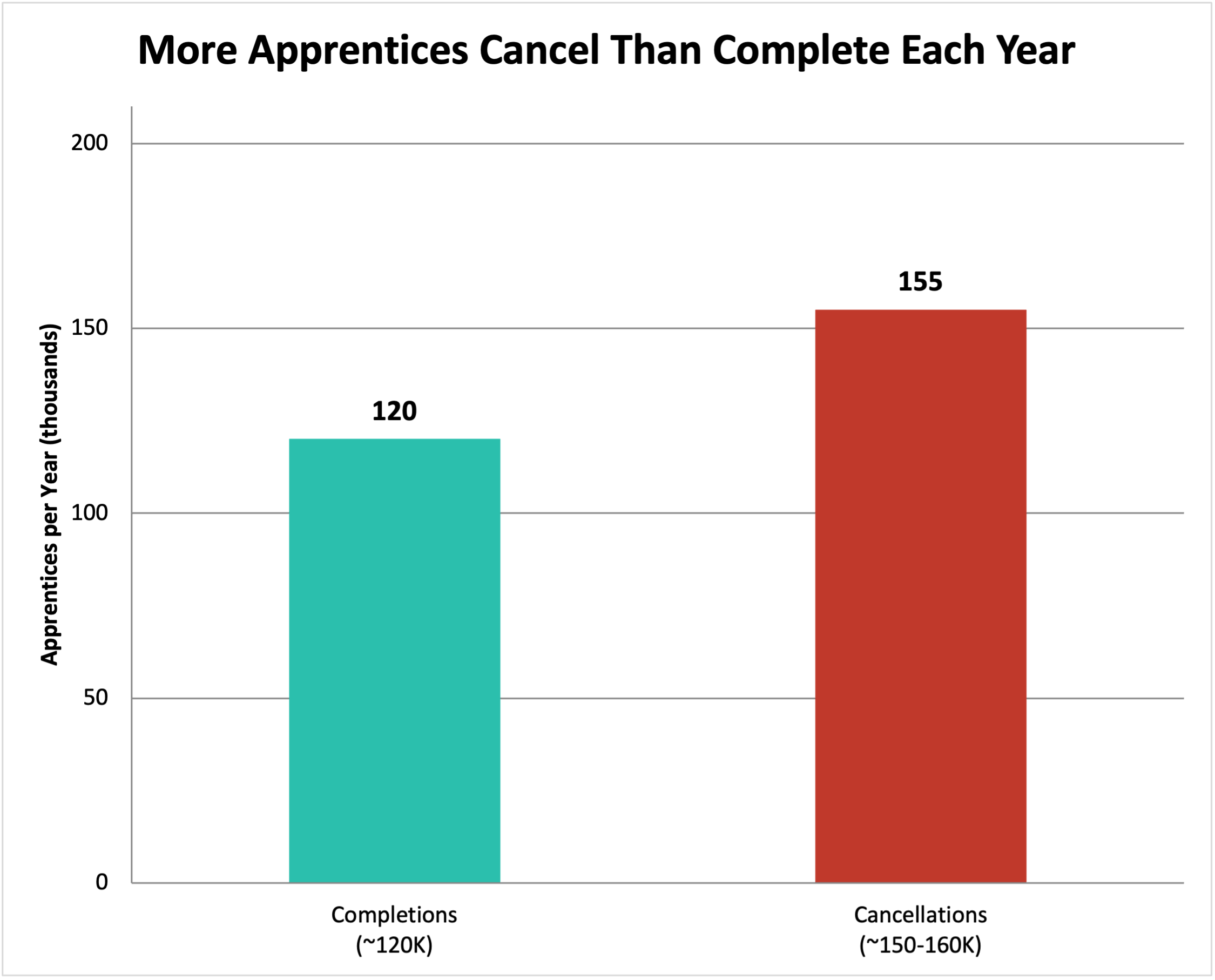
Attacking the Cancellation Challenge (Figure 6)
Growing the front door (new and active apprentices) is only half the equation. The back door — cancellations — is quietly eroding the impact of every new seat added to the system, and it deserves the same strategic attention as registration reform and new sponsor formation.
The numbers are stark. With approximately 300,000 new starts per year and an average program duration of roughly 2.3 years, the system processes an estimated 150,000–160,000 cancellations annually — compared to approximately 120,000 completions. Social Finance’s analysis of RAPIDS data found that of apprentices who started programs in 2017, only 46.8% completed within six years — a generous measurement window, since most programs are designed to finish in four years or fewer. Cancellations essentially represent the single largest category of exit from the active apprenticeship stock.
The decade-long growth in new starts makes this especially costly. As new starts climbed from roughly 150,000 per year in FY2015 to over 300,000 today, the pool of apprentices exposed to cancellation risk more than doubled. If programs had sustained even a 60% completion rate — rather than the current ~47% — over that decade of ramp-up, approximately 286,000 additional apprentices would have persisted through completion rather than cancelling out without a single new registration or employer recruitment effort.
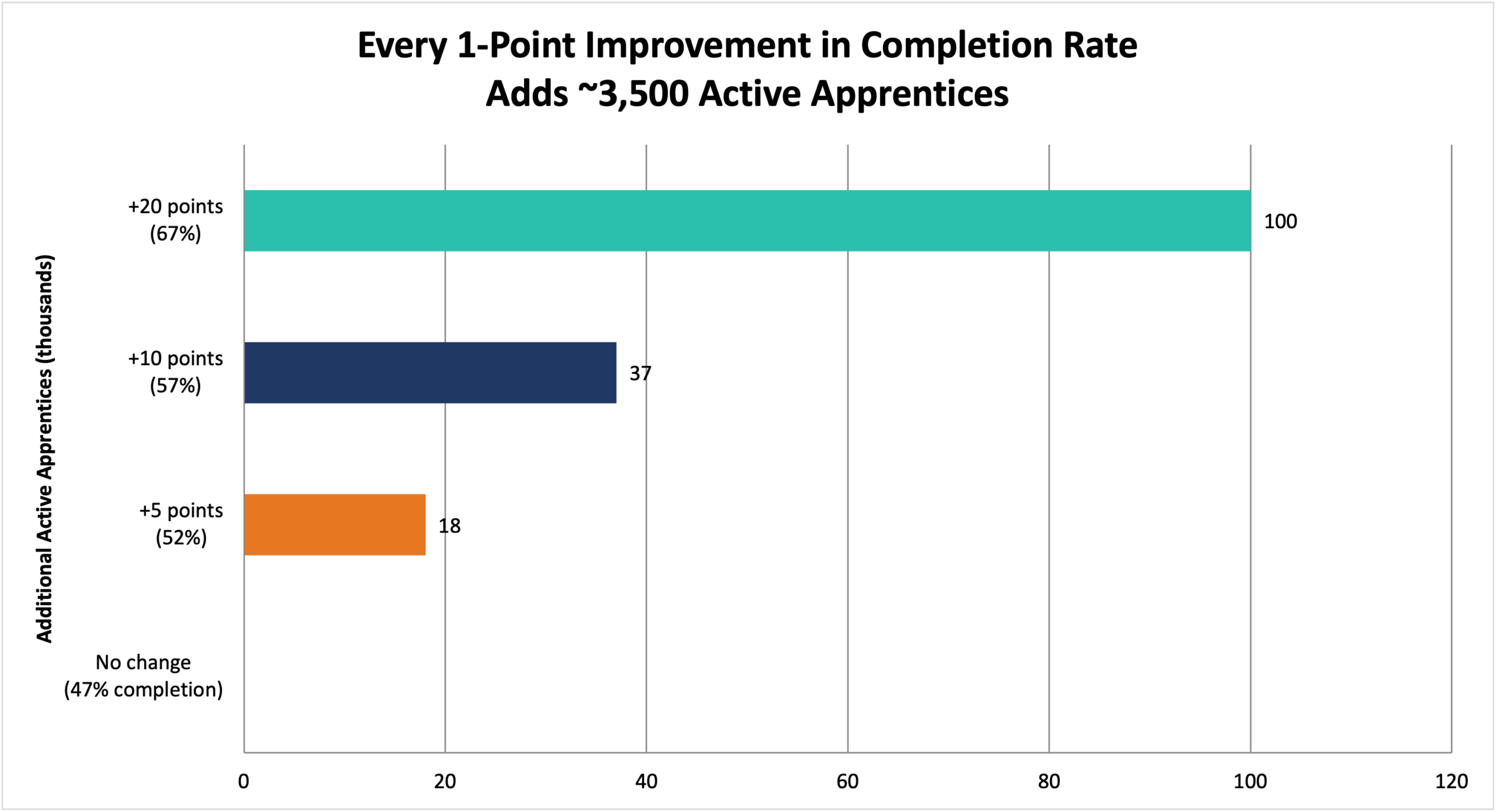
The forward-looking math is equally compelling. At today’s scale of ~300,000 new starts per year, each percentage point improvement in the completion rate prevents approximately 3,000 cancellations annually. Because those retained apprentices stay enrolled for an average of roughly another year before completing, each percentage point of improvement translates to approximately 3,500 additional active apprentices at any given moment. According to Social Finance, the increments add up quickly such that by 2030:
- A 5-percentage-point improvement in completion rates — entirely achievable through structured early intervention — would prevent roughly 15,000 cancellations per year and add approximately 18,500 to the active count.
- A 10-percentage-point improvement would prevent ~30,000 cancellations annually and add approximately 37,000 to the active count — closing about a third of the remaining gap to one million through retention alone.
- A 20-percentage-point improvement — bringing the system to roughly the completion rates seen in the best-performing state and sector programs — would prevent ~60,000 cancellations per year and add almost 100,000 to the active count.
These gains come from apprentices who are already enrolled, already matched to an employer, and already earning wages. The interventions that research and practitioner experience identify as most effective are not expensive: improved conversion from pre-apprenticeship programs, structured check-ins at 90 and 180 days (the highest-risk cancellation window); mentorship pairing in the first year; small targeted supports — transportation assistance, tool stipends, childcare help — that resolve the practical barriers most commonly cited in exit surveys; and proactive re-engagement when attendance or progress flags.
Recommendations: A Five-Part Strategy to Reach One Million
To address these challenges and help meet the “One Million” Apprenticeship goal, JFF offers the following five recommendations that we believe are achievable within existing regulatory authority, authorized funding levels, and are directly aligned with the President’s Executive Order and advance longstanding bipartisan priorities for apprenticeship. These recommendations also amplify JFF’s broader recommendations to Modernize and Expand Registered Apprenticeship Nationally. Together, JFF estimates these interventions can add at least 200,000 net new active apprentices by FY2030, putting the one million goal within reach by FY2028–FY2029 with a sustained implementation effort.
Recommendation 1: Develop a public 5 Year Investment Strategy that supports the entire Apprenticeship Eco-System and can drive scale across industries.
While every new Administration brings shifting priorities and policy changes, the past year’s disruption in funding has been challenging across the entire apprenticeship ecosystem. While disruption can lead to innovation, ambitious goals also require a clear plan on the strategies and tactics to achieve the goal. Recently announced investments signal a return to more reliable funding approaches, but broader communication from DOL is critical to articulate a vision for alonger-term investment strategy that includes the following
- 1 Million Apprentices Implementation Plan: The Administration should communicate and release a broad implementation plan on how federal policy, investments, and communications are being aligned to achieve the 1 million apprentice goal. While state and industry leadership are critical, national direction and leadership is also essential in maximizing the impact of efforts of all stakeholders across the system.
- Systemic Approach: DOL’s annual appropriation of approximately $285 million should not be viewed as a collection of unique investments but part of a cohesive strategy to fund all critical stakeholders across the apprenticeship eco-system including industry and employers, sponsors, intermediaries, States, as well as partnerships across workforce and education systems. An investment strategy should also consider the need for technical assistance, electronic tools, and other resources that can efficiently remove the friction across the system for all key stakeholders.
- Long Term: Apprenticeship stakeholders, particularly employers and States, need some certainty around the investment landscape when determining if they should co-invest in apprenticeship. DOL should develop a long-term (5 year) and public plan that provides both the certainty and the direction that this unique public-private system needs to drive scaling of apprenticeship. Constantly shifting priorities and funding approaches undermines the value proposition for both industry, state leadership, and others to hire and invest in the infrastructure to expand the capacity and scale the system.
Recommendation 2: Launch a Public-Private Partnership to Lead a Major National Outreach Campaign and Work with Industry Leaders
The single most powerful signal the Administration can send to American industry, and the public, is that apprenticeship is no longer a niche workforce program — it is a national talent strategy, championed at the highest level and led by the country’s most respected business leaders. JFF recommends launching a public-private partnership as the organizing vehicle for private-sector commitments that can independently fundraise and help contribute at least 100,000 additional apprentices to the one million goal.
By its nature, Registered Apprenticeship is a public-private partnership, but the system is often restrained by the limitations of operating within the constraints of what is allowable and appropriate for federal or state agencies. Marketing and supplemental fundraising are two specific examples of areas with significant restrictions for federal agencies. There’s also growing evidence that the private sector is ready to embrace the challenge. BlackRock’s Future Builders initiative — announced this month — commits $100 million in philanthropic grant capital to reach 50,000 skilled trades workers over five years. Coordination with these efforts will be critical to successfully scaling apprenticeship across all industries.
- Partnership Structure and Membership: The new partnership should include an executive board of at least one senior business leader from each major industry sector — manufacturing, construction, transportation, healthcare, IT, financial services, energy, and others — with at-large representation from organized labor, state workforce agencies, and education systems. Membership is a commitment, not an honorific. Entity members are expected to serve as:
- Campaign Leads: Each sector lead publicly commits to a specific number of new RA seats within their industry — signed, announced, and tracked. Partnership members use their industry platforms and peer networks to recruit other employers into RA sponsorship. The White House provides visibility; the partnership provides the peer accountability that government programs and efforts alone cannot replicate.
- Industry Standard Setters: Each sector lead is also responsible for developing at least ten high-priority apprenticeship occupation standards per year for their industry, and for submitting those standards through an expedited review pathway. Standards developed by partnership members — vetted by the nation’s leading employers in each sector — receive streamlined DOL registration review. Employers who adopt pre-approved standards can register new programs quickly with minimal additional burden.
This structure solves two problems at once: it creates a sustained private-sector demand signal (Campaign Leads), and it removes one of the most persistent supply-side barriers — the time and expertise required to develop occupation standards (Standard Setters). Together, they accelerate both the number of sponsors and the speed at which new programs can be launched.
The partnership should also assume operational responsibility for National Apprenticeship Week, elevating this important event to an even higher level with greater visibility across national media and key industry leaders. National Apprenticeship Week can also serve as the annual anchor and accountability moment for industry commitments.
Recommendation 3: State Apprenticeship Growth and Innovation Zones
Similar to the Administration’s efforts to promote innovation in the WIOA system through waivers, the apprenticeship system needs a focused effort to drive further modernization and scaling. The Administration’s $84 million state capacity grant investment is an enormous asset — but can be leveraged further to incentivize growth and innovation. ETA should leverage the competitive portion of existing state apprenticeship grants to promote strategies specifically intended to drive further innovation and growth across the national apprenticeship system. States selected for the competitive portion of these existing grants would be considered part of a cohort of growth and innovation zones that identify high impact innovation and/or growth strategies that could include:
- New multi-employer sponsor formation strategies;
- Reciprocity compacts between participating States;
- Establishing State-wide intermediaries;
- Commitments to improved registration processes and/or provide registration transparency similar to DOL’s shot clock model adapted to the SAA context;
- Testing additional state-based pay for performance or incentive funding;
- Targeted efforts to substantially improve retention and completion rates;
- State identified strategies that promote innovation and/or growth.
Selected States could also receive focused TA based on proposed RA strategies. Thematic tracks could include jumpstarting stalled growth, sector approaches including manufacturing, construction (aligned with the reshoring agenda), and AI/cybersecurity (aligned with the AI Action Plan). Quarterly virtual learning and employer-to-employer roundtables build peer accountability that can supplement greater data transparency.
Recommendation 4: Expand Pre-Apprenticeship and Youth and Degree Apprenticeship Models to Accelerate Scalable Growth
Access to quality pre-apprenticeship directly addresses the completion rate challenges discussed earlier. Youth and degree apprenticeships represent two of the most promising and scalable pathways for rapidly expanding the apprenticeship system—particularly given growing bipartisan and employer interest in earn-and-learn models that connect education directly to careers. While roughly 40 percent of registered apprentices are between ages 16 and 24, most enter after high school; relatively few begin as youth apprentices, and even fewer are connected to postsecondary degree pathways. Expanding these models offers a clear opportunity to increase participation at scale in the national apprenticeship system.
Recent research underscores both the momentum and the opportunity. Work by New America and Urban Institute highlights that degree apprenticeships—programs that integrate registered apprenticeship with college credentials—are gaining traction across states and sectors but remain limited in scale due to fragmented implementation and under-leveraged public funding streams. Their analyses find that while the foundational components already exist (employer demand, postsecondary partners, and federal funding), participation remains constrained by the absence of coordinated pathways that connect high school, apprenticeship, and degree attainment into a single system.
The opportunity, therefore, is not primarily to build new systems, but to scale these emerging models by better leveraging existing investments—particularly in high schools, community colleges, and workforce systems—to support structured youth and degree apprenticeship pathways. Building on guidance and policy already issued related to joint planning and use of waivers to support innovation, a focused strategy should prioritize:
- Scaling youth apprenticeship as an entry point: Expand high school–based apprenticeship models that allow students to begin earning and learning before graduation, with clear continuation into postsecondary or degree apprenticeship programs. States such as South Carolina, Iowa, and Missouri demonstrate that these models can reach scale when education and employer systems are intentionally connected.
- Accelerating degree apprenticeship pathways: Engage post-secondary to support the expansion of programs that combine registered apprenticeship with associate and bachelor’s degrees—particularly in high-demand sectors like healthcare, IT, advanced manufacturing, and infrastructure. As New America and Urban Institute note, these models are especially effective at attracting new populations into apprenticeship, including learners who might otherwise pursue traditional college-only pathways.
- Improving conversion from pre-apprenticeship to registered apprenticeship:
Existing pre-apprenticeship investments can be more intentionally connected to youth and degree apprenticeship pathways by establishing clearer transition points, earlier employer commitments, and aligned program timelines.
Recommendation 5: Leveraging the Power of the Federal Government
No lever for reaching one million apprentices is more underutilized than the federal government’s own workforce and procurement power. The Administration has a unique opportunity to use federal employment, federal contracting, and foreign direct investment as direct drivers of apprenticeship growth — setting an example that the private sector can follow and creating structural demand for RA that does not depend on employer persuasion alone.
JFF recommends a two-prong Federal Apprenticeship commitment:
- Federal Workforce Transformation: 100,000 Federal Apprentices: Direct OPM to set an explicit goal of at least 100,000 active apprentices in the federal workforce. The United Services Military Apprenticeship Program (USMAP) — the largest single registered apprenticeship program in the country, covering Navy, Marine Corps, and Coast Guard active-duty personnel — demonstrates exactly what is possible when the federal government treats its own workforce development seriously. A relaunched and expanded Pathways Program and Presidential Management Fellows Program, redesigned around earn-while-you-learn apprenticeship models, would extend that logic to civilian federal employment. States, including a recent initiative from NGA, are already leading on expanding public service apprenticeships at the State level. Apprenticeship-based entry pathways in cybersecurity, IT, healthcare, logistics, and construction trades would rebuild federal workforce capability while adding directly to the national count.
- Federal Contractor and Grant Apprenticeship Requirements: Require federal contractors above a threshold contract value to maintain active RA programs and report apprentice enrollment as a condition of contract award or renewal. This is consistent with existing Buy American and domestic content requirements — extending the same domestic workforce logic to labor. The Administration’s defense industrial base investment, infrastructure agenda, and AI/semiconductor buildout all involve massive federal contracting activity that could be converted into structured RA demand overnight. Direct federal agencies to award bid points on federally funded workforce projects to bidders who utilize RA in the execution of those grant activities.
Conclusion
The goal of reaching one million active apprentices represents a natural next step in the strong, bipartisan progress that has already provided the foundation to expand Registered Apprenticeship across the country. The system’s growth over the past decade—alongside increasing engagement from employers, states, and new industry sectors—demonstrates a solid foundation to build upon.
The recommendations outlined here are designed to accelerate that momentum by strengthening coordination, unlocking new pathways, and reinforcing the elements that have driven success to date. By aligning public investment with private-sector leadership, expanding access points through youth and degree models, supporting state innovation, and enhancing retention, the Administration can catalyze the next phase of growth. With sustained focus and collaboration, Registered Apprenticeship is well positioned to scale as a cornerstone of the nation’s workforce strategy—broadening opportunity for workers while meeting the evolving talent needs of the American economy.
Data Appendix
Eight figures supporting the analysis and recommendations in the accompanying memorandum. All enrollment data drawn from the DOL RAPIDS / Apprenticeship.gov dashboard. Scenario projections and conversion estimates are JFF analytical constructs.
Figure 1. Active Apprentices Have Nearly Doubled Since FY2016
The system grew from 396,000 to 702,000 active apprentices — a 77% increase in nine years. But year-over-year growth is now below 6% and declining, putting the 1 million goal out of reach without deliberate action.
Source: DOL RAPIDS / Apprenticeship.gov dashboard. FY2016–FY2025.
Figure 2. Growth Rate Has Decelerated — From 10%+ to ~5%
Pre-COVID growth exceeded 10% annually. Post-COVID recovery peaked at 6.2% in FY2023 and is now declining by about 0.4 percentage points per year. At this rate, the system reaches ~843,000 by FY2030 — 157,000 short of the goal.
Source: DOL RAPIDS / Apprenticeship.gov dashboard. Year-over-year change in active apprentice count.
Figure 3. New Starts Exceed 300,000 Per Year
Registered Apprenticeship is already the largest training delivery system ETA oversees — with more new apprentices annually than all those receiving training from WIOA Adult, Dislocated Worker, and Youth programs combined.
Source: DOL RAPIDS / Apprenticeship.gov dashboard. New apprentices = first-time starts in fiscal year.
Figure 4. More Apprentices Cancel Than Complete Each Year
The system processes an estimated 150,000–160,000 cancellations annually, compared to ~120,000 completions. Social Finance found that only 47% of those who started a program in 2017 had completed within six years. Cancellations are a significant drag on the active count.
Source: JFF analysis of DOL RAPIDS trend data; Social Finance RAPIDS analysis (2025 cohort study).
Figure 5. Modest Gains in Completion Rate Yield Large Returns
Each 1-percentage-point improvement in the national completion rate prevents approximately 3,000 cancellations per year and adds ~3,500 to the active count. A 10-point improvement alone would add ~37,000 active apprentices — more than a third of the remaining gap to one million — without a single new program registration.
Source: JFF analysis. Assumes ~300,000 new starts per year and ~2.3-year average program duration. Scenario impacts are illustrative estimates.
Figure 6. Manufacturing Remains Critically Underrepresented
Despite the Administration’s reshoring agenda, manufacturing accounts for only about 4% of active apprentices — roughly 30,000 workers in a sector with millions of employees. Construction still dominates at 39% of active apprentices, down from ~53% a decade ago. Education and public administration have grown, but the sectors most central to reindustrialization remain thin.
Source: FY2026 data from DOL RAPIDS / Apprenticeship.gov dashboard. FY2016 shares estimated from RAPIDS data.
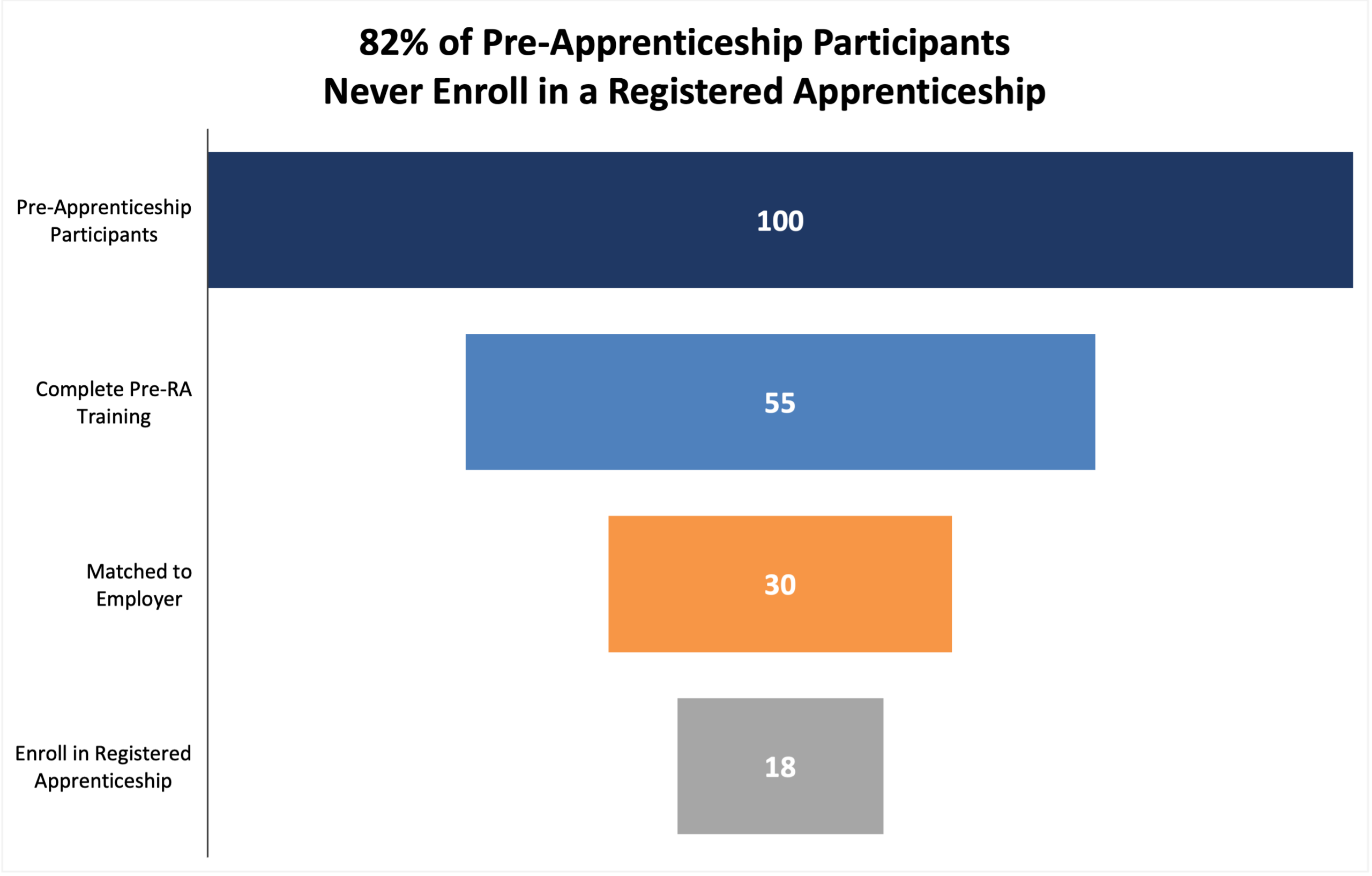
Figure 7. 82% of Pre-Apprenticeship Participants Never Enroll in RA
Roughly 82% of pre-apprenticeship participants never enroll in a registered program — not because they are unqualified, but due to structural gaps: late employer engagement, no committed seat agreements, and timing mismatches between pre-RA completion and RA cohort start dates.
Source: JFF analysis — illustrative. Based on ABA grant data and DEIA Hub cohort evidence. Values indexed to 100 pre-RA participants.
Figure 8. Path to One Million — Status Quo Falls Short
At current trajectory, the system reaches ~843,000 by FY2030 — 157,000 short of the President’s goal. Full implementation of the five recommendations is projected to reach one million by FY2029, adding 150,000–200,000 above the status quo through a combination of new sponsor formation, retention improvement, youth pipeline growth, and federal demand levers.
Source: JFF projections. Baseline: 702,191 active apprentices (FY2025, DOL RAPIDS). Not official DOL projections.
Data Notes
Enrollment data (Figures 1–3, 6) drawn from the DOL RAPIDS / Apprenticeship.gov dashboard, current through early FY2026 (March 2026). Cancellation and completion data (Figures 4–5) are JFF estimates based on RAPIDS trend data and Social Finance’s 2025 cohort analysis; they should be treated as approximate. The pre-RA conversion funnel (Figure 7) is illustrative, based on JFF program experience. Scenario projections (Figure 8) and impact timelines (Figure 9) are JFF analytical constructs and are not official DOL projections.