
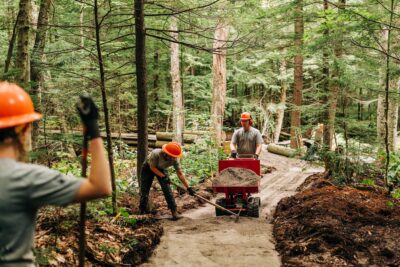
Appalachian Mountain Club
Project
Powering Service-to-Career Pathways
September 28, 2026
At a Glance
Service experiences offer high-quality work-based learning and training that helps people build skills, social capital, and connections to careers while strengthening communities. JFF works to expand these programs and pathways.
What Are Service-to-Career Pathways?
Service-to-career pathways, which include community-based volunteer and employment models such as AmeriCorps, The Corps Network (TCN), YouthBuild, and Youth Mental Health Corps, offer prolonged and structured experiences that embed high-quality work-based learning, experiential learning, and workforce development practices alongside community-driven and -led service activities.
By anchoring training and career exploration in community investment and engagement, the result is a model that benefits participants, strengthens communities, and deepens civic connections. Structures vary, but the aim is shared: build skills, knowledge, and experience through meaningful, community-based work and create stronger on-ramps to careers.
Service-to-career pathways:

Support the development of technical and durable skills

Foster leadership development, civic engagement, and belonging

Build social capital and professional networks

Provide mentorship, wraparound supports, and career coaching and navigation

Offer opportunities to earn industry-recognized credentials and academic credit

Create direct on-ramps to jobs, earn and learn programs like Registered Apprenticeship, and educational programs
Why Service Matters Today
The link between service and employment is well established: an alumni survey from Service Year Alliance found that 87% of service year alums gained skills during their service year that helped prepare them for future employment, and 63% of alums found full-time employment within six months of completing a service year.
Today, employers are struggling to fill more than 7.4 million open jobs nationwide. But, a shifting labor market, tariffs and inflation, climate impacts, and the growth of AI are all reshaping how people find and keep work, particularly at the entry level.
Service has long been part of how America develops its workforce and meets community needs—through the Civilian Conservation Corps of the New Deal era, the launch of AmeriCorps in the early 1990s, and the civic and volunteer organizations active in communities nationwide. Service experiences engage people at every career stage: young people seeking their first job, dislocated workers changing careers, incumbent workers building new skills, and veterans and people with records reentering the workforce. As the pathways into these jobs and careers shift under economic and technological pressure, service offers a proven point of entry and reentry into the workforce system.
How The Center for Apprenticeship & Work-Based Learning is Strengthening Service-to-Career Pathways
Our work focuses on strengthening the conditions that help service programs and initiatives function as a high-quality form of work-based learning and a reliable workforce training strategy. We work with service program providers, federal and state agencies, national intermediary organizations, philanthropy, policy makers, employers and industry leaders to bolster workforce connections, increase awareness and visibility of the value of service as a career pathway and talent development strategy, remove barriers to participation, and amplify best practices and policy and design solutions.
We support the creation and expansion of service-to-career pathways through:

Employer and stakeholder engagement
to improve post-service placement outcomes

Ecosystem building and systems alignment
to support stronger integration of service into the workforce and education systems

Pathway and program design
including instructional design and alignment with pre-apprenticeship, Registered Apprenticeship, and work-based learning

Readiness assessment and landscape mapping
to identify opportunities to enhance programming and expand critical partnerships and connections to the labor market

Research and evaluation
to validate credentials and career pathways, scale effective models and practices, and drive member outcomes

Resource and sustainability development
to build the capacity of local and national programs, and support long-term impact

State strategy and policy support
to drive quality in programming, improve data, and increase access for more individuals and industry and workforce partners

Strategic advising, coaching, and communities of practice
to support adoption of best practices and share innovative strategies and approaches
Key Projects and Collaborations

Vermont Youth Conservation Corps
Annie E. Casey Foundation Corps 2 Career Initiative
JFF serves as a technical assistance (TA) and advising partner on the Corps to Careers Initiative, an Annie E. Casey Foundation-led effort to help local programs of The Corps Network strengthen connections between service and career pathways for youth and young adults. JFF provides coaching, TA, resources, and research to help programs build strategic plans that engage workforce and education partners, embed youth-centered and work-based learning designs, and improve post-service placements and outcomes.

National Governors Association
National Governors Association Service-to-Career Pathways Policy Academy
JFF served as an advisory board member on the National Governors Association’s (NGA) recent Service-to-Career Pathways Policy Academy. This initiative helped six states build strategic action plans to align service with workforce development, with a focus on priority sectors and engaging youth, young adults, and individuals facing barriers to work and education. JFF provided strategic advising to NGA leadership and light support to states in their efforts.

Fresno EOC Local Conservation Corps
Connecting Service with Pre-Apprenticeship & Registered Apprenticeship
Across multiple projects, JFF has worked with local service programs to expand connections to earn-and-learn pathways for participants. This includes integrating service into pre-apprenticeship programs and definitions, helping states advance policies linking service to youth apprenticeship and pre-apprenticeship, and working with Registered Apprenticeship sponsors and employers to validate skills gained through service and grant advanced standing to participants. JFF also supports stakeholders to navigate and align the rules and regulations governing apprenticeship and AmeriCorps.


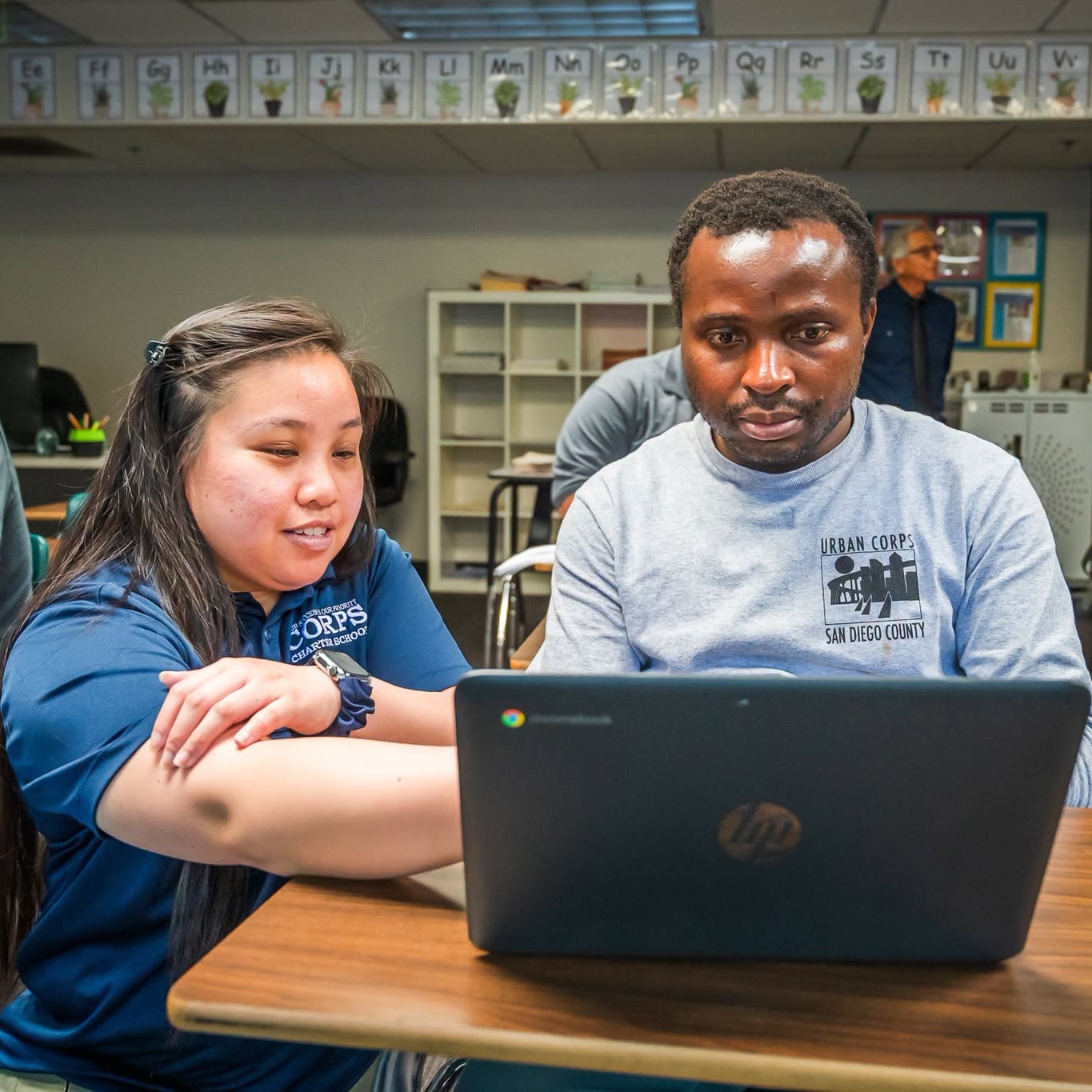
Above photos courtesy of (from left to right): Conservation Corps of Long Beach, American YouthWorks, Urban Corps of San Diego.